
15 Easy January Kitchen Reset Ideas for a Small Rental Kitchen You Will Love

By the second week of January, a small kitchen tells the story of December. The cookie tins are still on top of the fridge, the good platter is wedged in with the cereal, and the junk drawer has gained three rolls of tape and a pile of twist ties. Every cabinet opens with a small avalanche.
A january kitchen reset fixes that before the clutter turns into the new normal. You don’t need a remodel or a cart full of matching containers. Tiny kitchens don’t need more storage so much as storage that fits how you actually cook.
These ideas work cabinet by cabinet and drawer by drawer, with renter-safe fixes that need no drill and leave no marks. Most take under an hour, and a few take ten minutes. Start with the zone map, pick one spot, and keep going from there.
1. Empty One Cabinet at a Time, Starting Next to the Stove
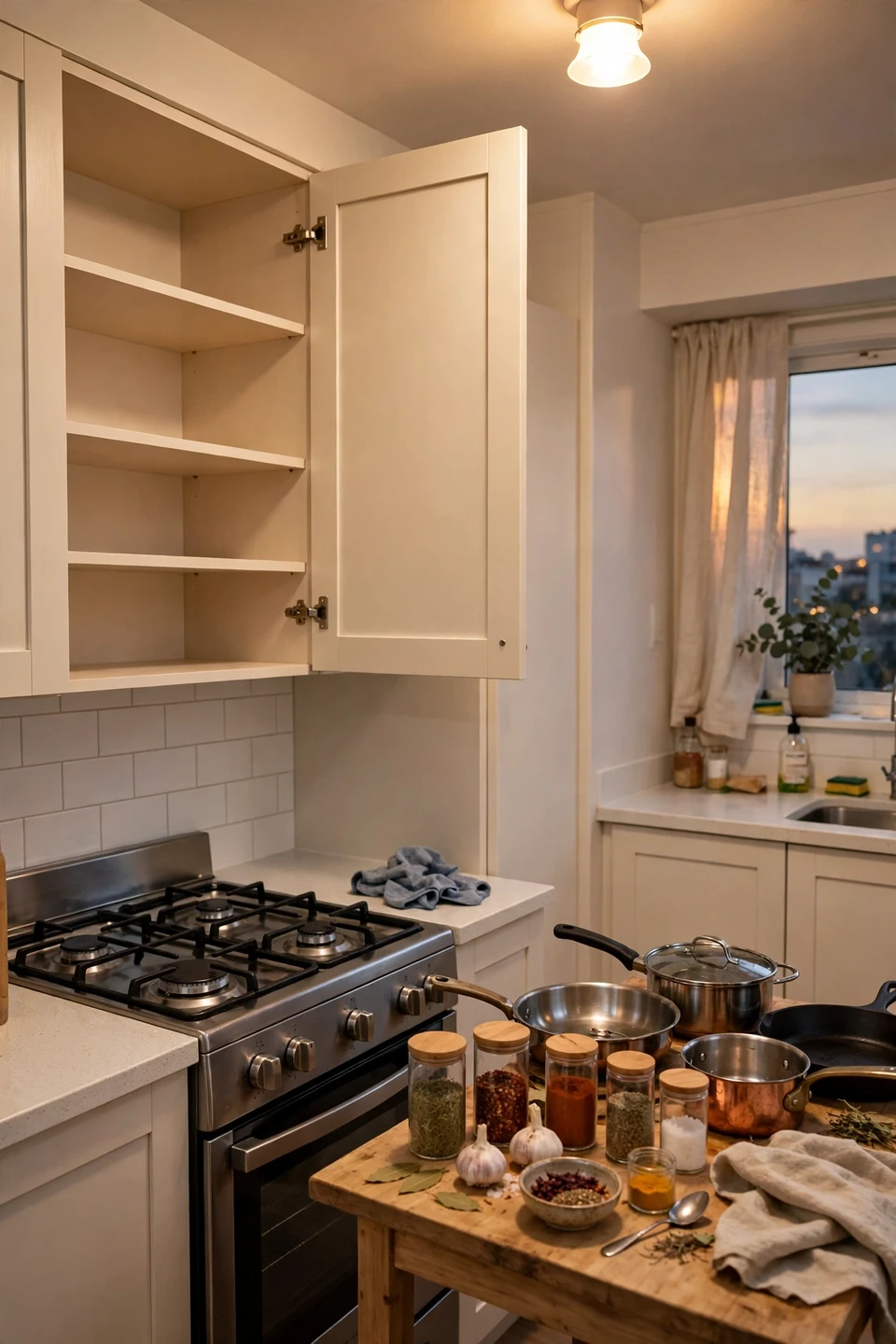
Pick the cabinet you open most, usually the one beside the stove, and empty it completely. Doing the whole kitchen at once leaves every surface covered and nowhere to cook dinner.
One cabinet takes about 20 minutes, and you’ll see a real change by the end of the night.
Take everything out and set it on the table.
Wipe the shelves and let them dry.
Pull out anything broken, chipped or used once a year.
Put back only what you used in the last month, with the most used things at the front.
Tomorrow, do the next cabinet over.
2. Move the Holiday Overflow Out of Your Everyday Cabinets
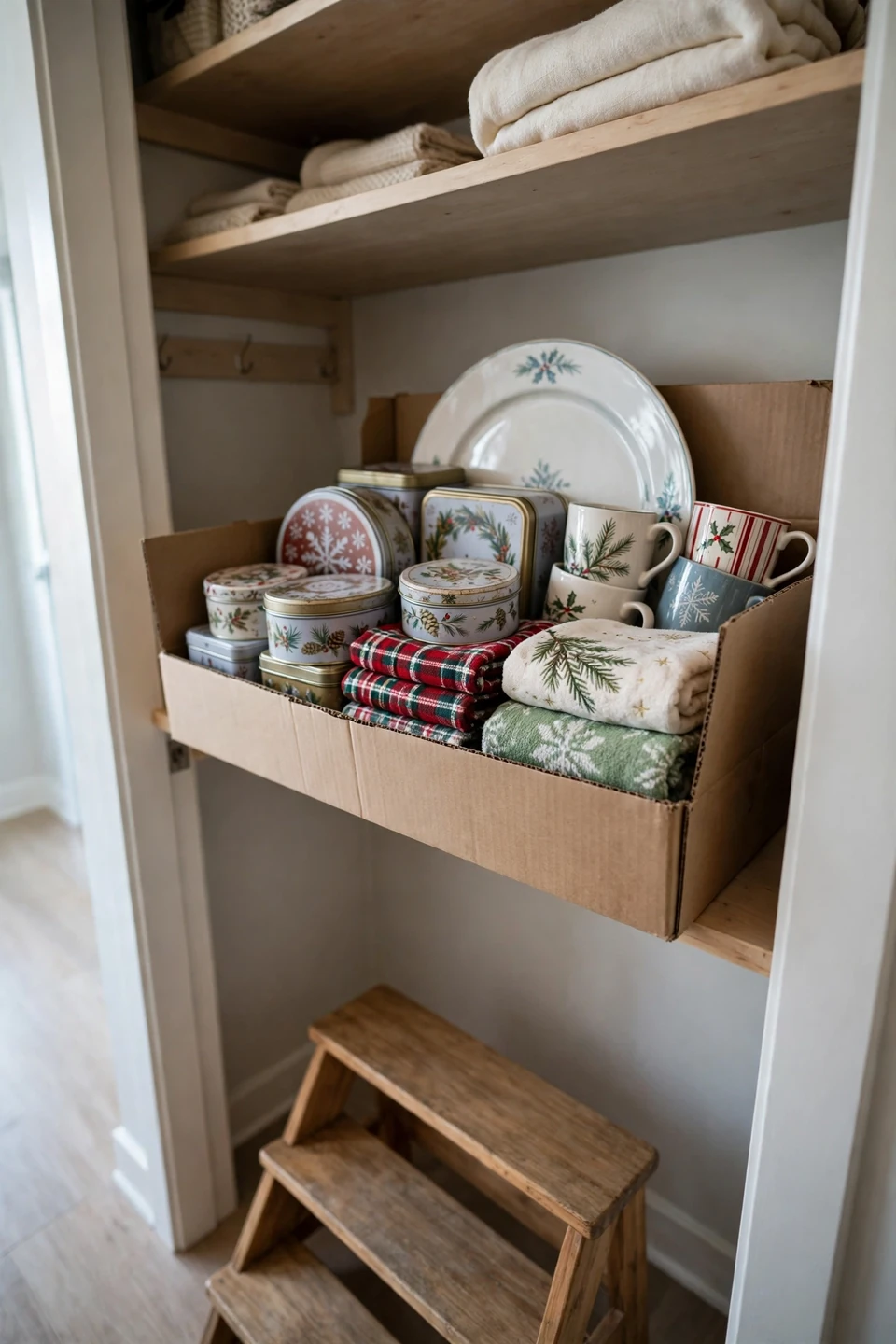
The common mistake is putting holiday things back wherever they came from. Then the big roasting pan, the cookie cutters and the punch bowl sit in prime cabinet space for eleven months.
Give the overflow its own box. Label it “holiday kitchen” and put it on the top shelf of a closet or above the fridge. The everyday cabinets get their room back.
Cookie cutters, tins and seasonal mugs.
The big platter and the gravy boat.
Holiday towels and festive napkins.
Keeping a roasting pan in the cabinet you open daily.
Saving every empty gift tin for someday.
Stacking heavy dishes above head height.
3. Set Up a Coffee Station on One Tray
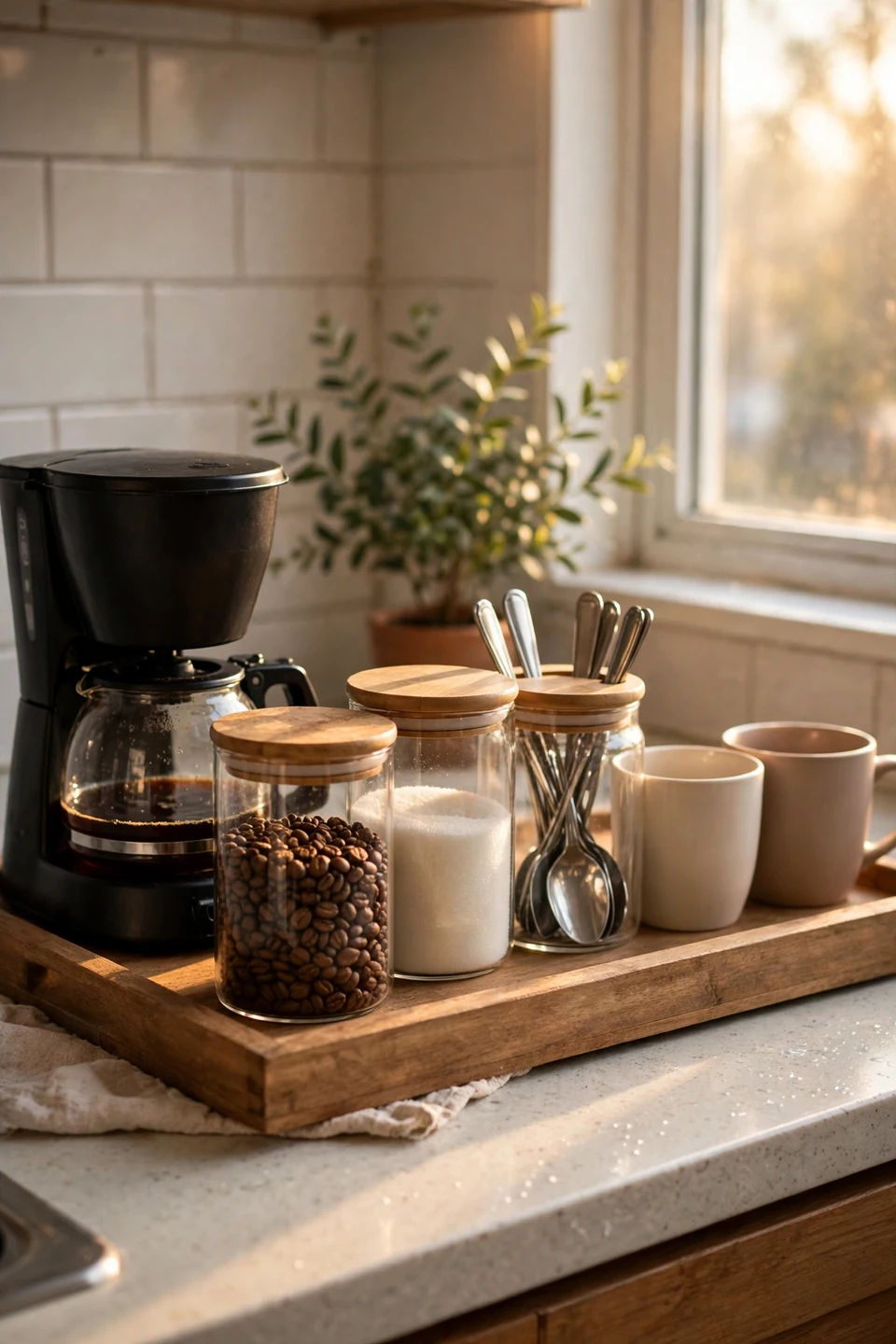
Every morning goes a little smoother when the coffee things live together. No more opening three cabinets before your first cup.
Gather the mugs, beans or grounds, filters, sugar and spoons onto one tray in the corner nearest the outlet. When it’s time to wipe the counter, the whole station lifts in one go.
- Keep only the mugs you use, maybe three or four.
- Stand spoons in a small jar.
- Put a little dish under the scoop to catch the drips.
4. Hang Measuring Cups Inside a Cabinet Door

If it hangs, it doesn’t get lost. Measuring cups and spoons are the first things to vanish in a crowded drawer.
Stick two or three small removable adhesive hooks on the inside of a cabinet door, the side nobody sees, and hang the cups and spoons by their handles. Check that the door still closes with everything hanging.
💡 Quick Tip
Test one hook in a hidden corner first and leave it overnight. To remove it later, pull the release tab straight down, slowly, so it comes off clean. Check your lease if you’re unsure about adhesive on the cabinets.
5. Stand Pot Lids Upright in a File Organizer

A cabinet full of lids looks like this: a leaning pile, one lid always sliding off, and the one you need at the very bottom. A metal file organizer or an old dish rack set inside the cabinet stands every lid on its edge, sorted by size.
Biggest lids go at the back. Grab the one you need and the rest stay put.
Lids stacked on top of pans, clattering every time the cabinet opens.
Lids standing in a row, sorted by size, and the pans finally nest flat.
6. Divide the Junk Drawer With Small Boxes You Already Have

Sunday afternoon, you need a rubber band and end up digging through batteries, takeout menus and a single birthday candle. Every kitchen has that drawer.
Empty it onto a towel, toss the dead pens and old menus, then divide what’s left with small boxes from around the house. Phone boxes, jewelry boxes and the lids of shoeboxes all fit drawer depth.
Give each box one job
January Kitchen Reset Questions, Answered
How long does a January kitchen reset take?
Most small rental kitchens take one weekend if you work zone by zone. Plan a couple of hours for the fridge and pantry, another for cabinets and drawers, and a short session to set up the counter. You can also spread it over a week, one zone per evening.
Where should I start a January kitchen reset?
Start with the fridge and pantry, since expired food takes up the most space and makes everything else harder to sort. Once those are cleared, move to the cabinet you open most often, then the drawers, then the counter.
What should I get rid of after the holidays?
Expired spices and baking supplies, holiday leftovers past their safe date, duplicate utensils, chipped mugs, single-use gadgets you never reached for and any containers without lids. If you have not used it in a year, it is a good candidate to donate.
How do I keep the kitchen organized after the reset?
Give every category a single home, keep only daily items on the counter, and do a five-minute tidy each evening. A quick monthly check of the fridge and pantry stops the clutter from building back up.
Can I organize a rental kitchen without drilling?
Yes. Use tension rods under the sink, over-door racks on pantry doors, stackable shelves inside cabinets, adhesive hooks rated for kitchens and a slim rolling cart. All of them come out cleanly when you move.
What is the cheapest way to make a small kitchen feel fresh in January?
Clear the counters, wipe every surface and swap in fresh dish towels and a new hand soap. Those small changes cost very little but make the whole room feel like a clean start for the new year.
Should I deep clean appliances during a January kitchen reset?
Yes, if you have the time. Empty and wipe the fridge shelves, clean the microwave with a bowl of water and lemon, degrease the stovetop and run an empty cleaning cycle in the dishwasher. A clean appliance makes the whole kitchen feel newer.
How do I organize a tiny kitchen with very little cabinet space?
Use vertical space. Add shelf risers inside cabinets, a rail with hooks on an empty wall, a magnetic strip for knives and a slim cart beside the fridge. Store rarely used items, like holiday platters, outside the kitchen entirely.
7. Hang a Basket Over the Cabinet Door for Foil, Wrap and Bags

Rolls of foil and plastic wrap are awkward. They roll around in drawers and fall over in cabinets.
An over the cabinet door basket hooks onto the top of a lower cabinet door and holds them upright, with no screws. Foil, wrap, parchment and a box of sandwich bags all fit in one row.
Pick the door under the sink or next to the stove, where you wrap leftovers.
8. Pour Flour, Sugar, Rice and Oats Into Clear Canisters

Open bags of flour leak, and a half-folded bag of rice takes twice the space it needs. Clear, lidded canisters fix both problems, and you can see at a glance when something is running low.
Compare the two before you decide what to decant. Not everything needs a canister.
- Write the item and the use-by date on masking tape on the back.
- Pick square canisters, since they sit closer together than round ones.
| Decant into canisters | Keep in the original box |
|---|---|
| Flour, sugar, rice, oats | Boxed mixes with cooking steps on the back |
| Things you buy in bags and use often | Things you use once in a while |
| Keeps bugs and spills out | Saves buying extra containers |
9. Flat Freeze Leftovers and File Them Like Books
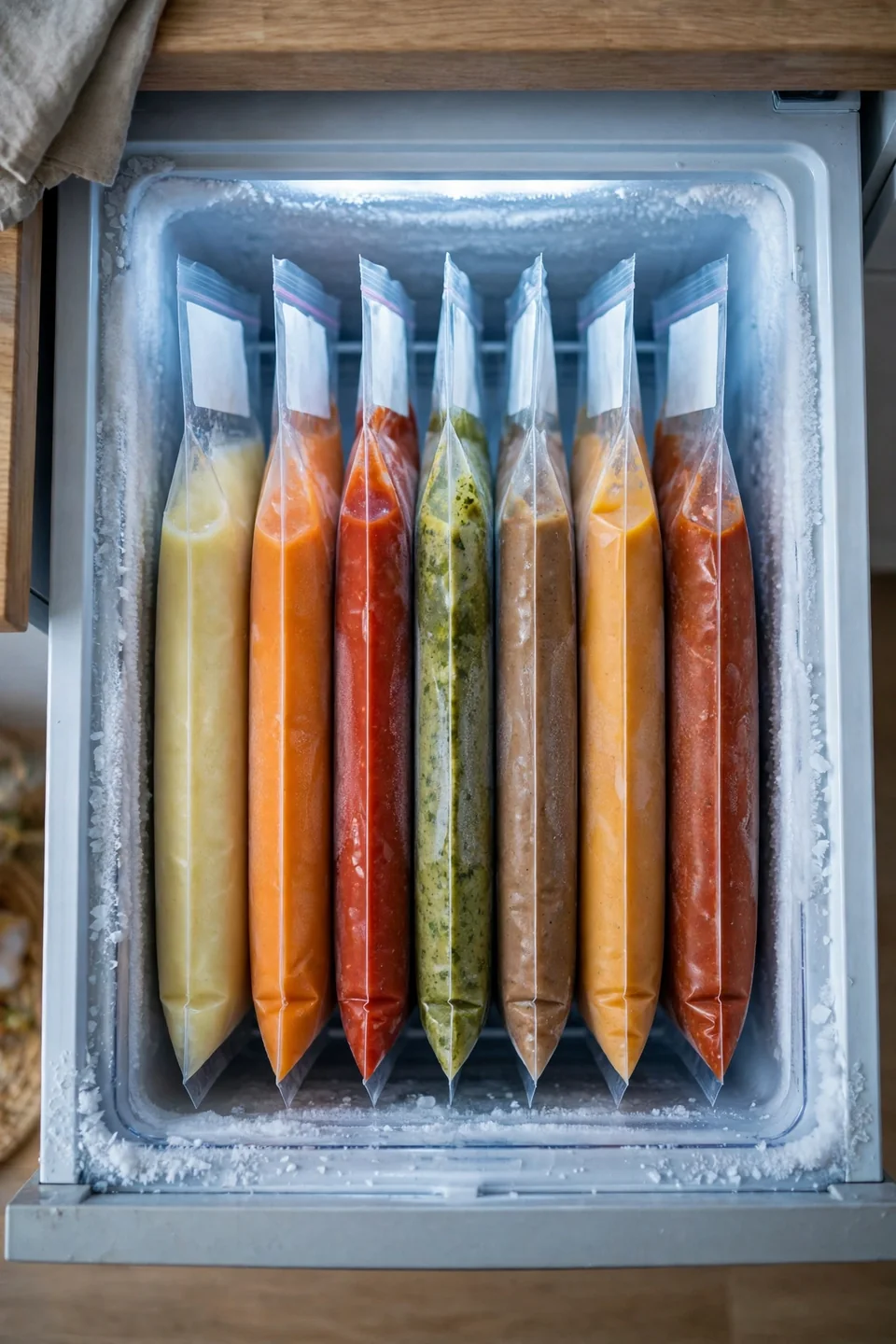
A full freezer isn’t the same as a useful one. Most small freezers are packed with lumpy bags and mystery containers, and that’s why nothing ever comes back out.
Freeze soups, sauces and chili flat in zip bags. Once frozen, stand them upright in a row like books, labeled on the edge with the name and date. Keep a short list taped inside a cabinet door so you know what’s in there.
Flat bags stand up, stack neatly and thaw faster. If you can read every label without moving anything, you’ll actually eat what you saved.
10. Line Up Spices on a Tiered Riser in Alphabetical Order

Spice jars all look alike from above. In a deep cabinet, the cumin you bought in March hides behind the cinnamon you bought twice.
A tiered spice riser lifts the back row so every label shows. Sort the jars alphabetically and you’ll never buy a duplicate again.
- ▸Smell each jar first. If there’s almost no scent, it’s time to replace it.
- ▸Combine duplicates into one jar.
- ▸Put the riser in a cabinet near the stove, but not directly above it.
- ▸Write the name on the lid too, for drawers or top-down views.
11. Slide a Slim Rolling Cart Into the Gap Beside the Fridge

Look at the space between the fridge and the wall. In a lot of rental kitchens, there’s a narrow gap there doing nothing but collecting dust.
A slim rolling cart, often only 5 to 7 inches wide, slides right in. It rolls out when you need it and back in when you’re done.
- Top shelf: oils and vinegars.
- Middle shelf: cans and jars.
- Bottom shelf: extra paper towels or bags.
Measure the gap at the back and the front. Old walls are rarely straight.
12. Store Pans Upright in a Pan Organizer

Stand them, don’t stack them. A freestanding pan organizer holds frying pans and sheet pans on their edges, like files, so you can pull out the one on the bottom without lifting four others.
It sits on the cabinet floor with nothing to install.
Measure the inside of the cabinet, including the door frame opening.
Set the organizer in and adjust the dividers to fit your pans.
Stand the biggest pan at the back and work forward by size.
Slide baking sheets and cutting boards into the last slots.
Nonstick pans scratch less this way, too, since they no longer rub against each other.
13. Give the Sink One Tray for Soap and Sponge

Wet sponges leave rings on the counter, and the soap bottle drips into a sticky puddle by Friday. A small tray beside the sink catches all of it.
Put the dish soap, the sponge and a scrub brush on the tray and nothing else. Rinse the tray once a week. It takes 30 seconds, and the counter around the sink stays dry.
Two soap bottles, an old sponge, a puddle and a pile of rings on the counter.
One soap, one sponge and one brush on a small tray. The counter stays dry and clean.
14. Clip a Weekly Meal Plan Inside a Cabinet Door
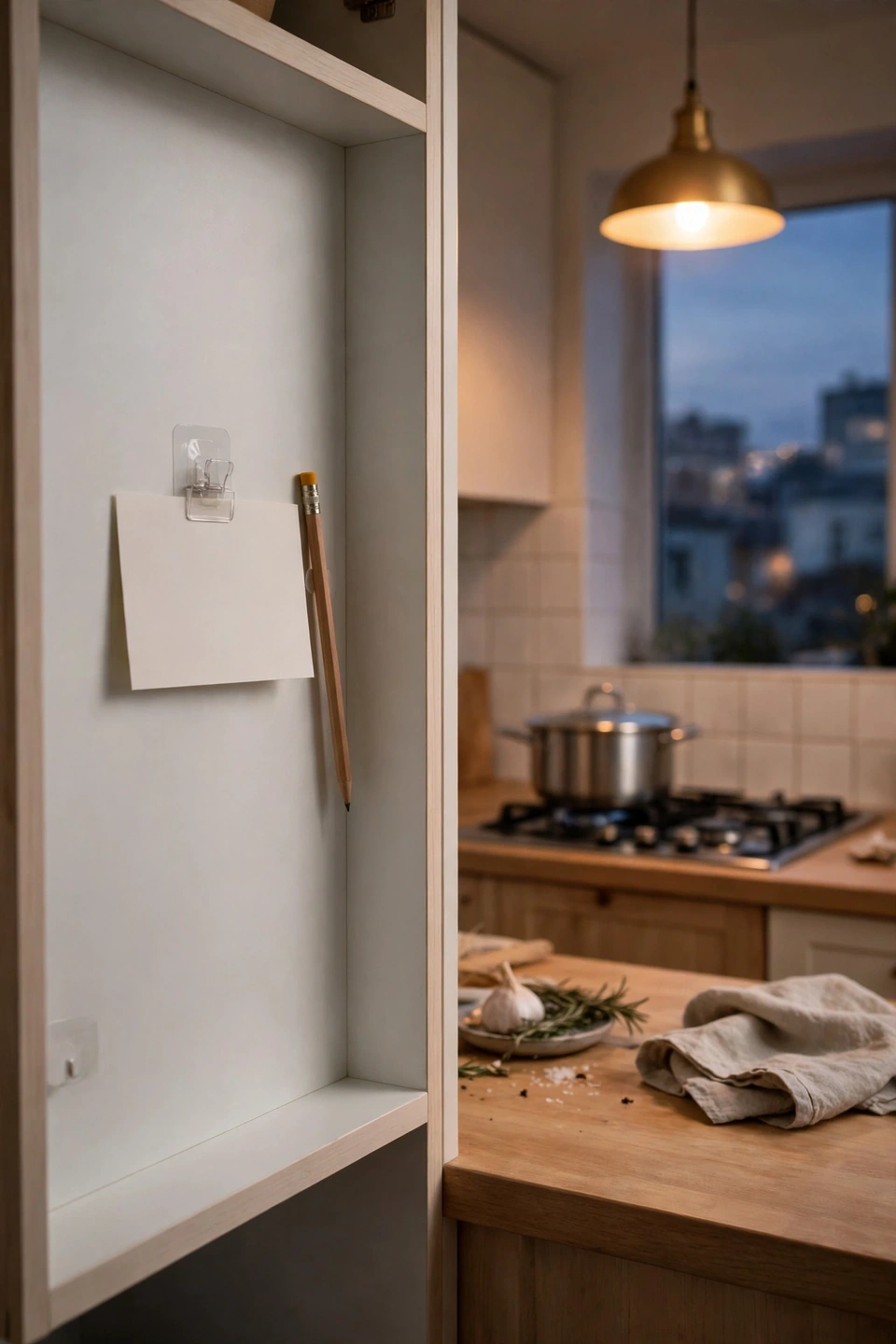
It’s 6 p.m., everyone’s hungry, and nobody knows what’s for dinner. A plan you can see helps more than a plan you made and forgot.
Write the week’s meals on a small card and clip it inside the cabinet door you open most, using the same removable hook as your measuring cups. Leave room at the bottom for a short grocery list.
📌 Good To Know
Plan around what’s already in your freezer and canisters first. A plan that uses up what you have keeps the reset from filling back up with new groceries.
15. Keep the January Kitchen Reset Going With a Sunday 15 Minute Sweep
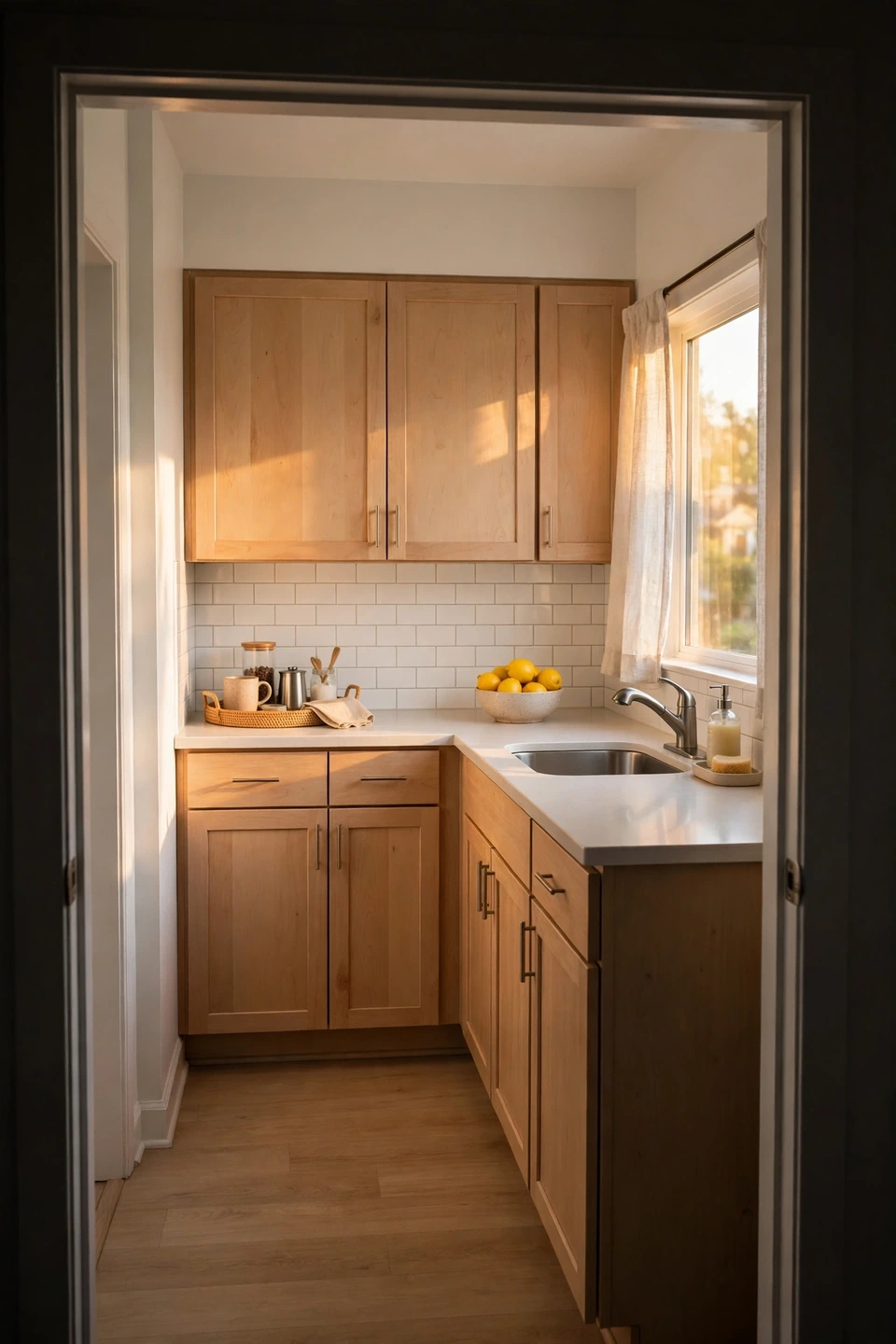
The kitchen stays reset when you give it 15 minutes once a week. That’s enough to catch the small slips before they turn back into clutter.
Every Sunday:
- Clear anything that crept onto the counter.
- Toss old leftovers and wipe one fridge shelf.
- Put strays back in the junk drawer boxes.
- Refill the canisters and update the freezer list.
A reset is one big week. The Sunday sweep is what makes it last until next January.
A Small Kitchen That Works Again
A small kitchen gets easier to cook in once each thing has one clear spot. Pans stand up, lids stop sliding, the coffee lives on a tray, and the holiday overflow is out of the daily cabinets. None of it needed a drill or a big shopping trip.
Start your january kitchen reset with one cabinet tonight, then add one zone a day. By next weekend, the kitchen will feel bigger than it did in December.
Put on a favorite playlist, set a timer for one zone at a time and stop when it rings. Small sessions are easier to finish than one huge cleaning day, and you will still end the week with a calmer kitchen than you started with.
A clear counter on the first Monday of the year is a small win that makes cooking at home feel easy again.
Keep the reset going with these New Year organization ideas, clear out the holiday baking storage, and refresh with these apartment kitchen decor ideas. The refrigerator and freezer storage chart from the Minnesota Department of Health helps when you clean out the fridge.
Save this list to your kitchen board, and come back to it whenever the cabinets start to fill up again.
🍳 Start tonight
Free Download
Get the Renter-Safe Decor Checklist
20 landlord-approved products and tricks I use in every small space project, sent straight to your inbox.






3 Comments