15 Best Removable Wallpaper Picks for Renters, Compared by Brand Type
Shopping for removable wallpaper usually goes like this. You find a pattern you love, open the listing, and see the same promises every brand makes: quick to apply, clean to remove, renter friendly. Then the reviews tell a different story, with one person’s wall losing paint and another’s showing neat, invisible seams.
The truth is that the best removable wallpaper for your rental depends less on the logo and more on what kind of brand it is. A designer line, a budget house brand and a thick textured vinyl maker all behave differently on a real wall, especially a slightly bumpy one with landlord paint.
This list breaks the market into 15 brand types and picks you’ll meet when you shop, with honest notes on thickness, pattern repeats, price feel and removal. Each one ends with what to check on the listing before you order. Use the buyer’s grid below to narrow it to one or two types first.
1. Designer Collaboration Lines for Statement Patterns
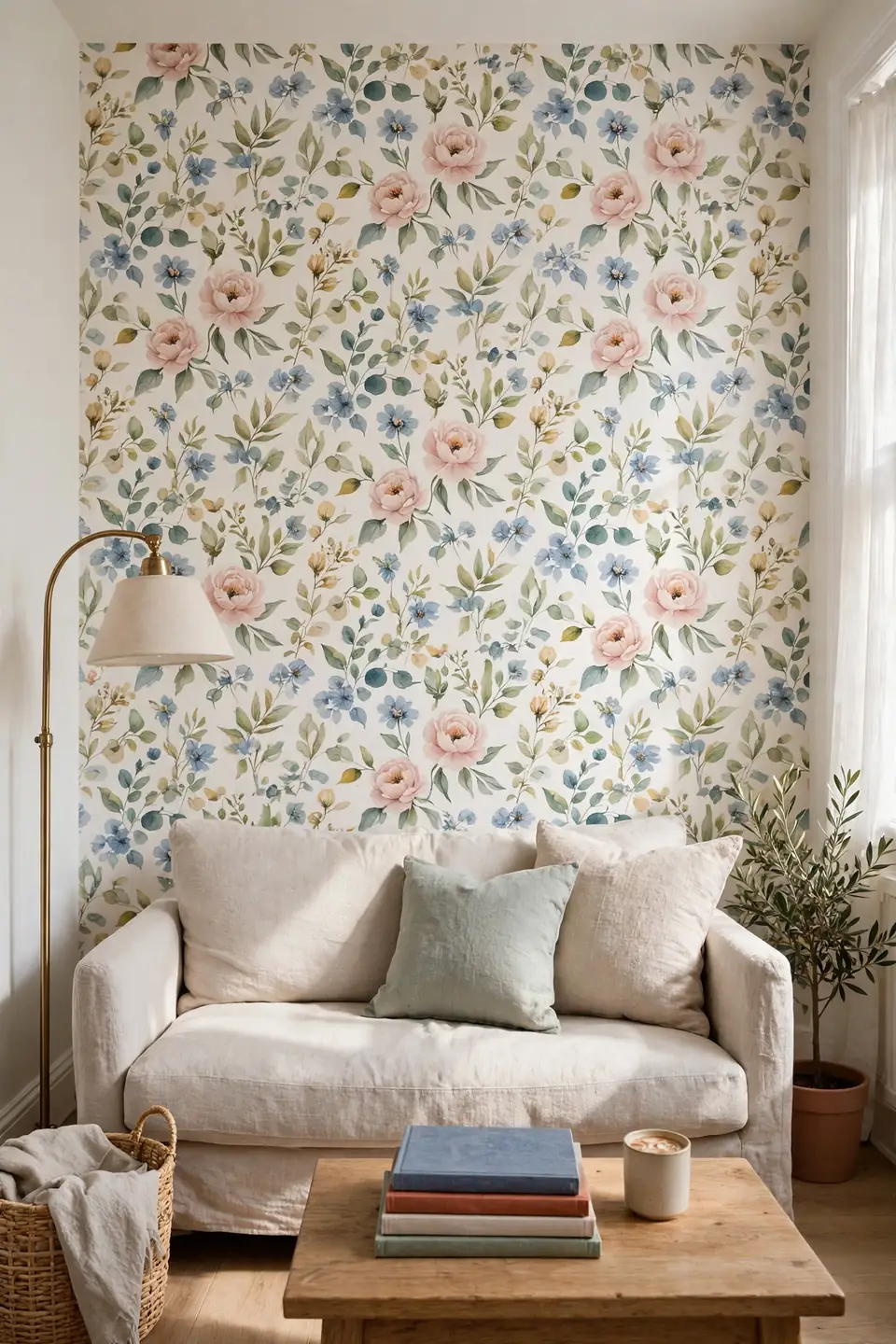
The pattern is the reason to pay more. Designer collaboration lines usually carry the most distinctive prints: hand drawn florals, painterly scenes and patterns you won’t see in every other apartment on Pinterest.
They tend to cost more per roll, and quality can vary between collections from the same seller, so judge each collection on its own.
Best for one statement wall you’ll look at every day.
2. Budget House Brands at Big Box Stores for First Timers
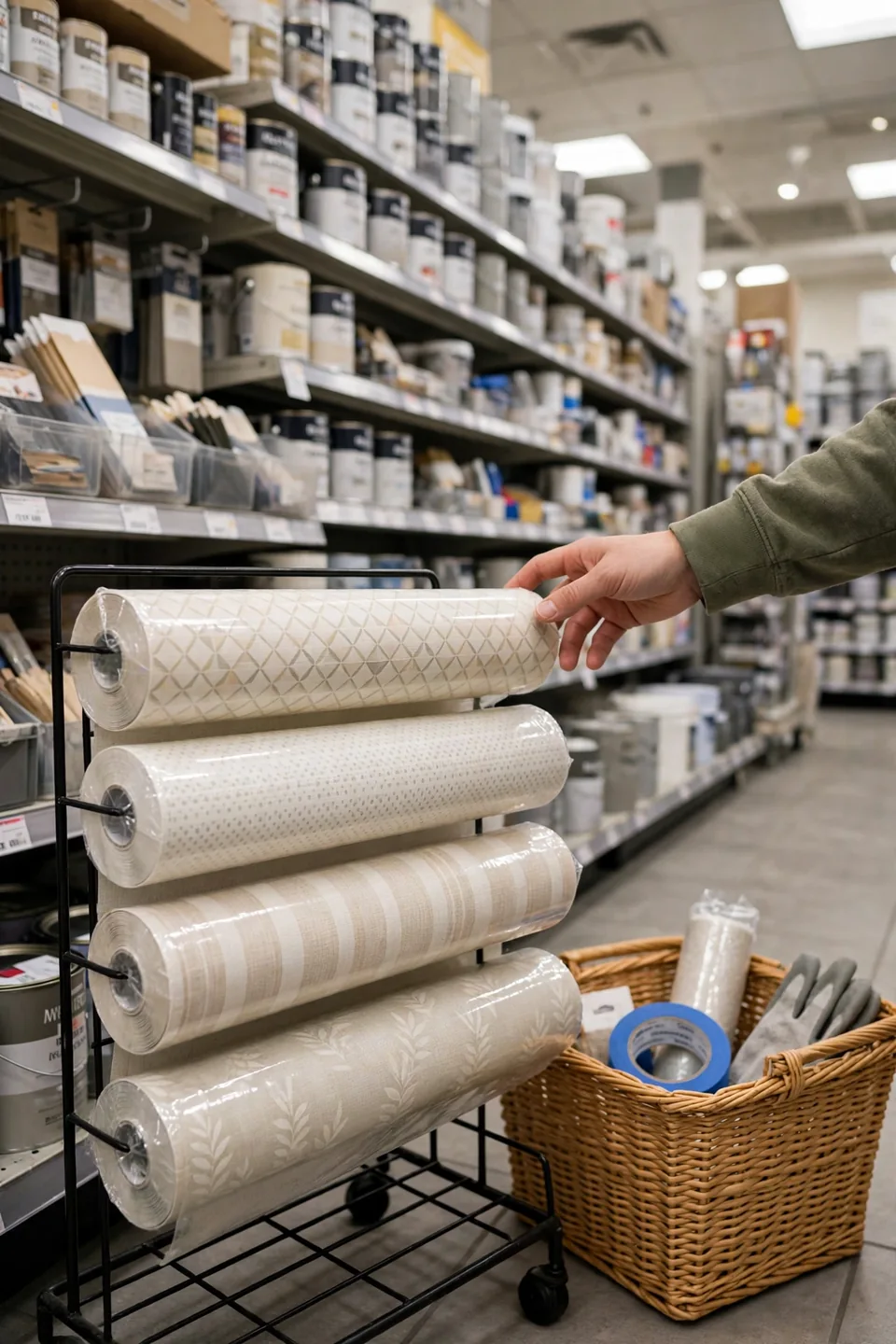
Standing in the paint aisle of a big box store, you’ll usually find a small rack of the store’s own peel and stick rolls. They’re cheaper, ready to grab the same day, and a low risk way to learn how wallpaper hangs.
The trade off is often thinner material, which shows every bump and dent in an older wall. Start with a small project, like the back of a bookcase or a closet door, before you commit a whole wall.
💡 Quick Tip
Buy one extra roll at the same time. Store brands can change or drop patterns, and a roll bought later may not match.
3. Thick Textured Vinyl Brands That Forgive Bumpy Rental Walls

Thicker isn’t always harder to hang. Thick textured vinyl brands often feel more forgiving on rental walls, because the extra body hides small bumps, patched nail holes and uneven paint that thin paper shows.
They can be stiffer around corners and outlets, so cuts take more care. Read what the maker says about wall finishes before you buy.
Use it on walls with small bumps or patches.
Read the maker’s wall finish advice.
Warm stiff corners lightly with a hair dryer.
Heavy orange peel texture.
Folding it sharply, which can crease it.
Assuming thick paper can’t lift paint.
4. Thin, Matte Paper Look Brands That Read Like Real Wallpaper
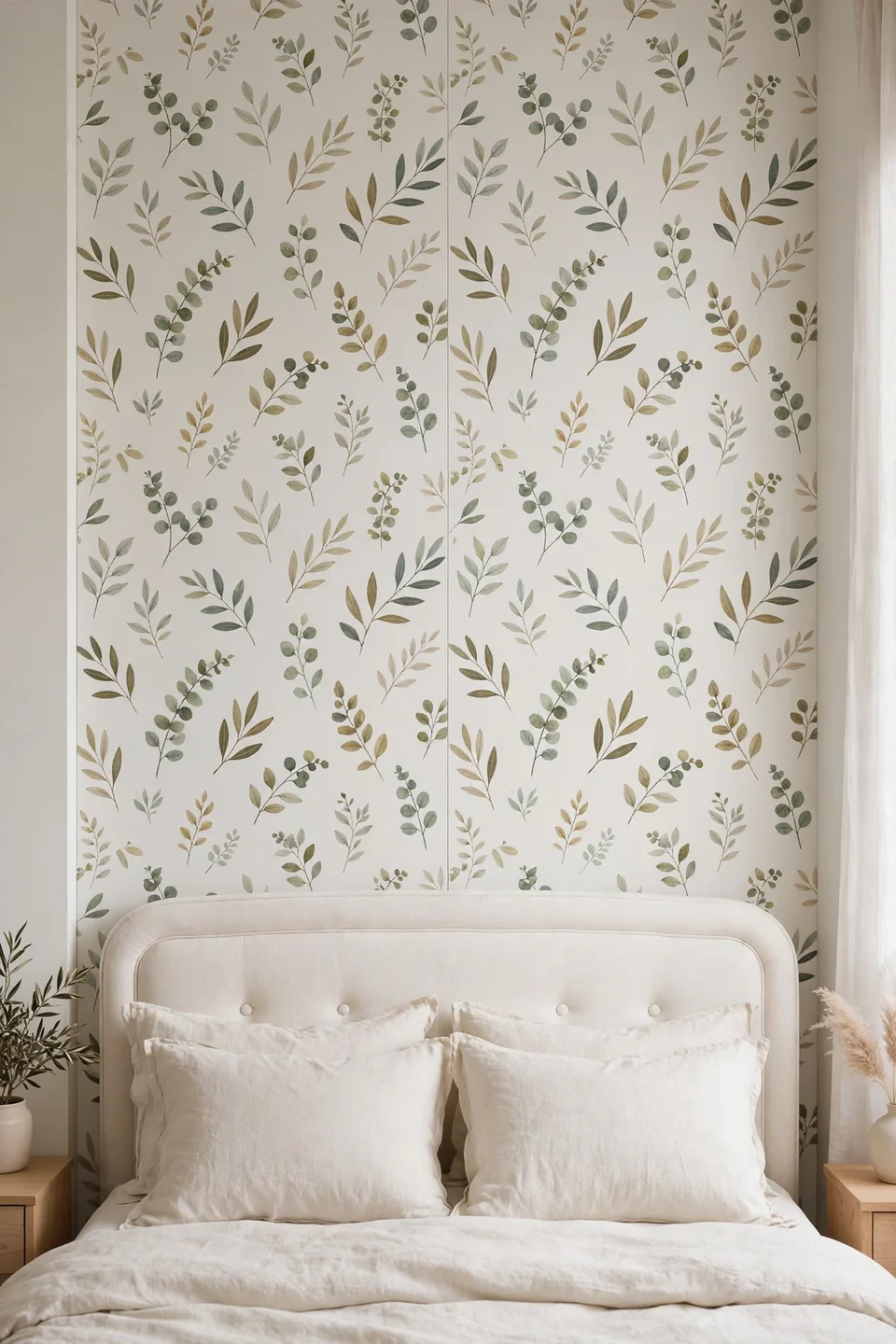
Thin, matte papers are the ones most often mistaken for real wallpaper. There’s no shine, the finish is soft and the seams sit crisp and flat. They look best on smooth walls in good condition.
Compare them with thicker vinyl before you pick:
| Thin matte | Thick vinyl |
|---|---|
| Looks most like real paper | Can have a slight sheen |
| Shows bumps and dents | Hides small flaws |
| Cuts cleanly around outlets | Stiffer at corners |
| Best on smooth walls | Best on older walls |
If your wall has been patched a lot, thin paper will show it.
5. Mural and Scenic Specialists for One Big Wall

A busy pattern can make a small room feel crowded, but a mural reads as a single picture. Mural specialists sell scenic designs in panel sets sized for one wall, like landscapes, gardens and soft skies.
The catch is sizing. Panels come in set widths and heights, so a mural that’s too small leaves a strip of bare wall, and one that’s too big wastes paper. Measure your wall before you even browse.
A mural ordered without measuring leaves a bare strip down one side of the wall.
A panel set chosen for the exact wall width fills it edge to edge, with nothing left over.
6. Grasscloth and Woven Texture Look Lines

Up close, a good grasscloth look paper shows fine horizontal lines and a soft, uneven weave, almost like linen. From across the room it reads as a warm solid color, which is why these lines suit a whole small living room or bedroom.
Real grasscloth is pasted on and hard to remove, so the peel and stick versions exist for renters. Quality varies a lot between brands, so check the listing closely.
Check the listing for
7. Kids and Nursery Pattern Brands With Wipeable Finishes
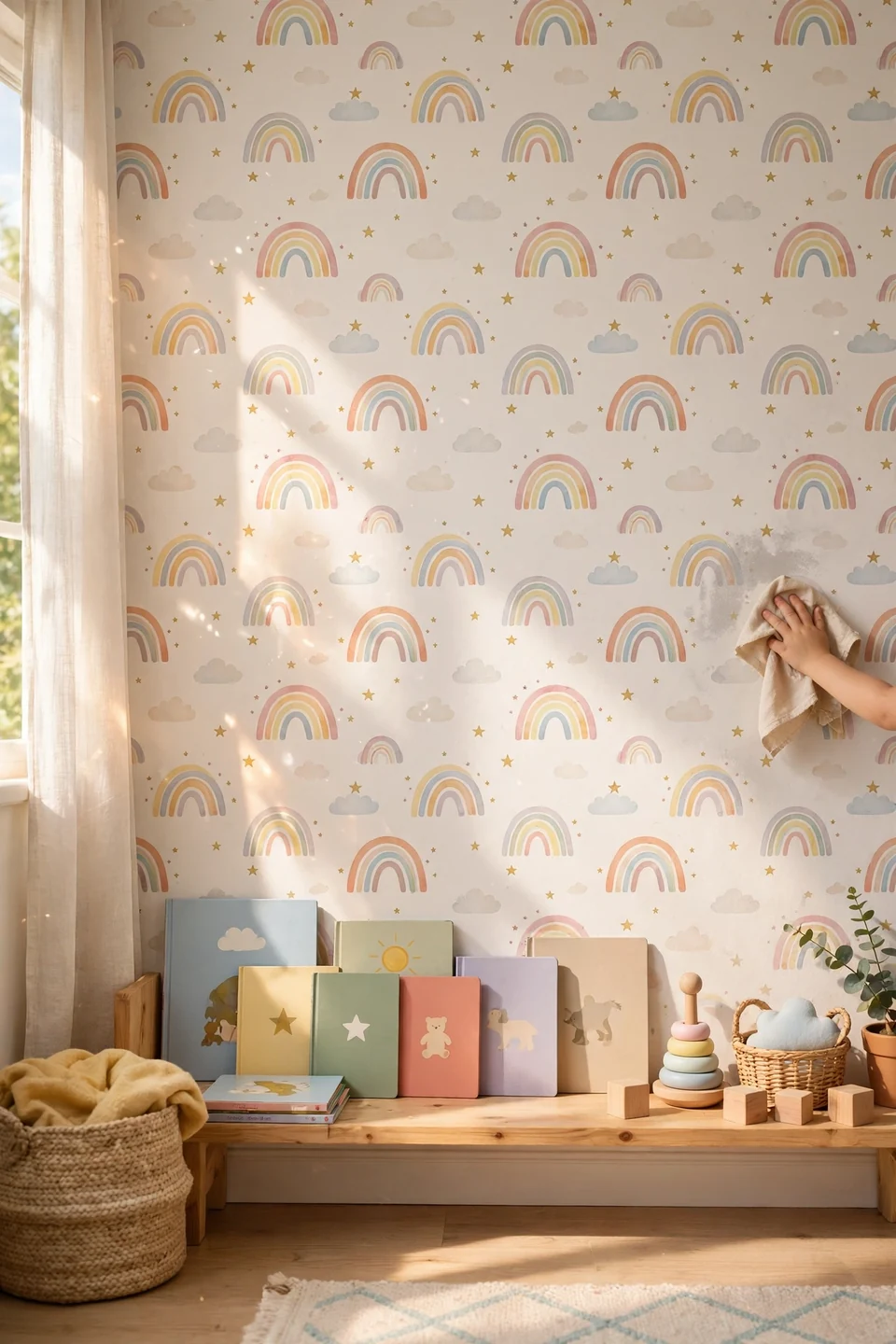
Kids’ rooms get touched more than any other room in the house, usually by small sticky hands. Brands that focus on nursery and kids’ patterns often offer wipeable finishes, soft colors and playful prints like stars, rainbows and little animals.
A wipeable finish matters more here than the pattern itself. Read the care notes before you order, and choose a print you won’t mind seeing for a few years.
8. Marketplace Sellers on Big Online Stores, Vetted the Careful Way
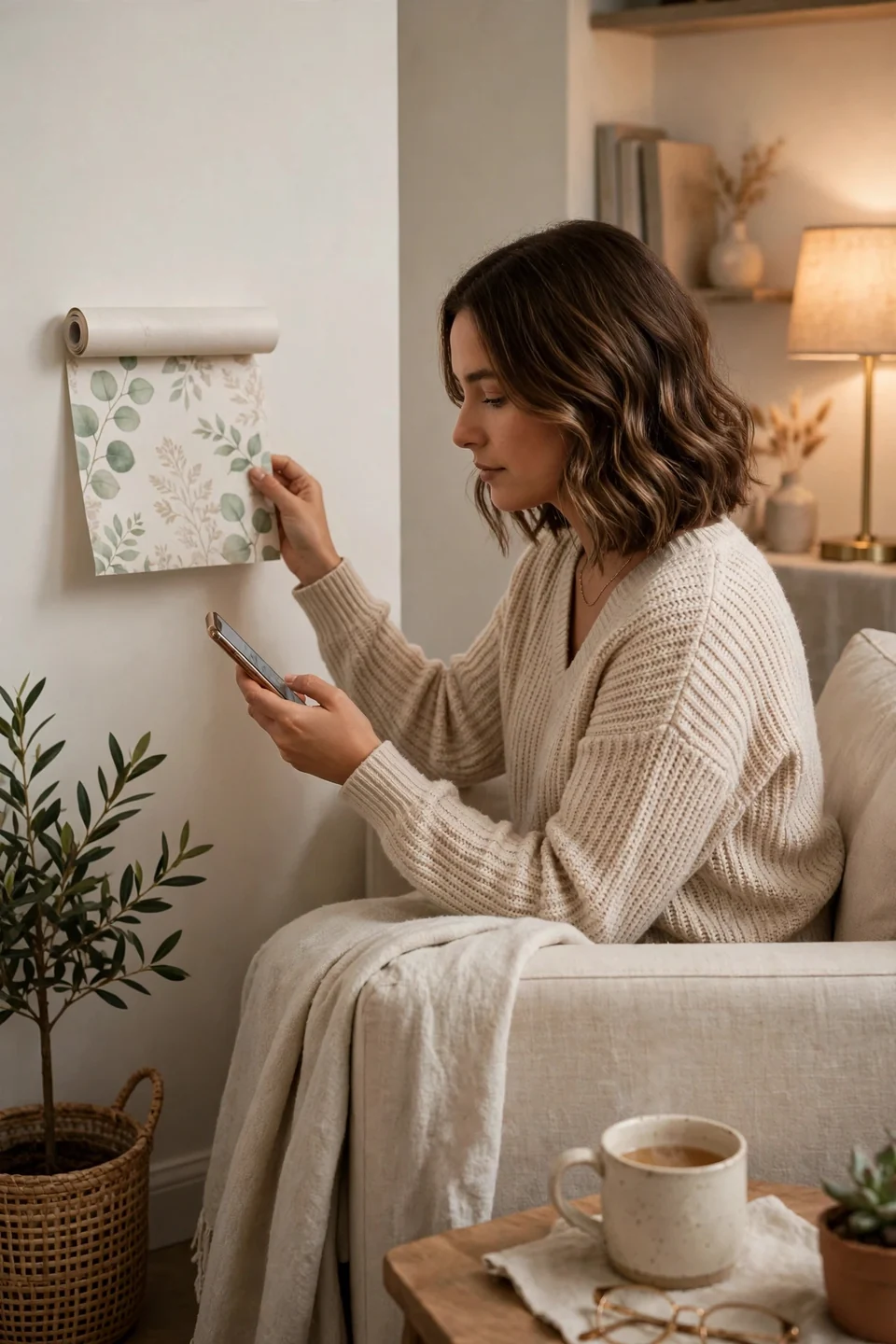
Marketplace listings can look like a bargain, with hundreds of patterns at low prices. Some are good. Others arrive thin, with colors that don’t match the photos. Vet a seller before you order a whole wall’s worth:
Scroll past the styled photos to customer photos taken on real walls.
Read the low star reviews first, looking for words like peeling, residue or paint.
Check the return policy for opened and unopened rolls.
Order one roll or a sample, and test it in a hidden spot.
Buy the rest only after the test passes.
9. Brands That Sell Samples Before You Commit
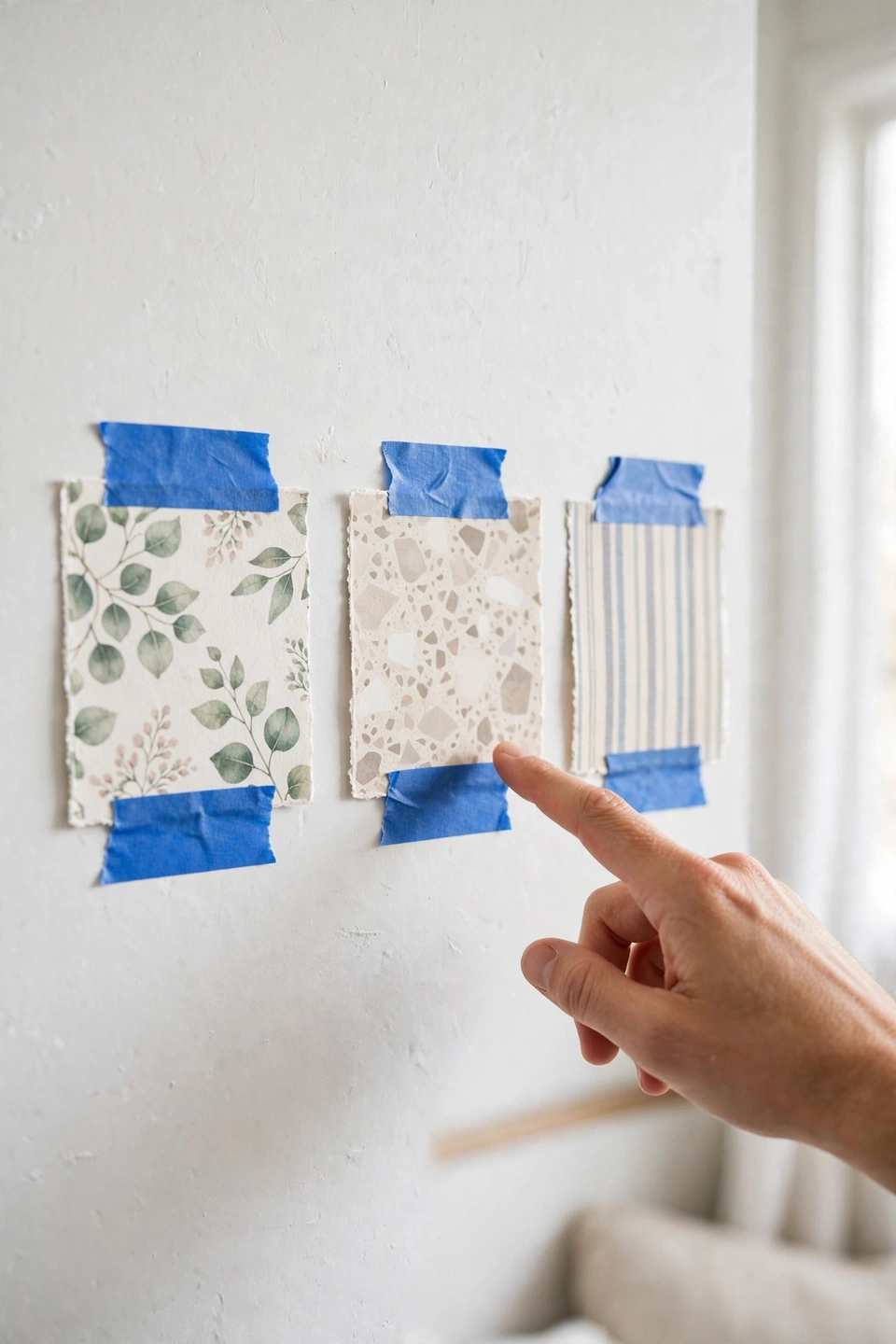
The most common buying mistake is ordering a full wall from a photo. Screens change colors, and a pattern that looks soft online can look loud on your wall at night.
Brands that sell samples, even small ones, let you tape the paper up and see it in your own light for a few days. Some also let you test removal on a hidden spot before you buy more.
A sample costs a few dollars. Ordering the wrong full wall costs far more, so buy the sample first.
10. Brands That List the Pattern Repeat on Every Product

The pattern repeat decides how much paper you’ll waste. It’s the distance before the pattern starts over, and larger repeats waste more paper at every seam.
Good brands put it right on the listing, so you can order the right amount the first time.
- ▸Look for the repeat size in the product details.
- ▸Check whether it’s a straight match or a drop match.
- ▸Order extra for large repeats, since more is trimmed at each seam.
- ▸Skip listings that don’t say, unless you can ask the seller.
11. Wide Panel Brands for Fewer Seams

Fewer seams means fewer places for the paper to lift, gap or look off. Some brands sell wider panels, which cover an accent wall in fewer strips and make pattern matching quicker.
Wide panels are heavier to handle alone, though, and harder to keep straight on the first try. If you’re hanging solo, a standard width can feel calmer.
12. Brands That Publish Clear Removal Instructions

Nothing is more stressful than move out week with a wall you don’t know how to take down. Brands that publish clear removal steps, with heat, angle and residue advice, usually expect their product to come off well and want you to do it right.
Read those instructions before you buy, not after. If a listing says nothing about removal, that’s worth noticing.
📌 Good To Know
Save a screenshot of the removal instructions with your receipt. Listings change, and you’ll want the steps when your lease ends.
13. Moisture Resistant Lines for Kitchens and Bathrooms

A lot of people believe any peel and stick wallpaper can go in a bathroom. It can’t. Steam and splashes loosen many adhesives, and corners start to drop.
Some brands sell lines labeled for humid rooms or wipeable for kitchen splashes. Even then, keep the paper away from direct water and choose a wall with good airflow.
Choose lines labeled for humid rooms.
Use it on a wall away from the shower.
Run the fan during and after showers.
Papering inside a shower or right behind the sink.
Assuming every wipeable paper handles steam.
Skipping the test patch in a steamy room.
14. Brands With Fair Return Policies on Unopened Rolls
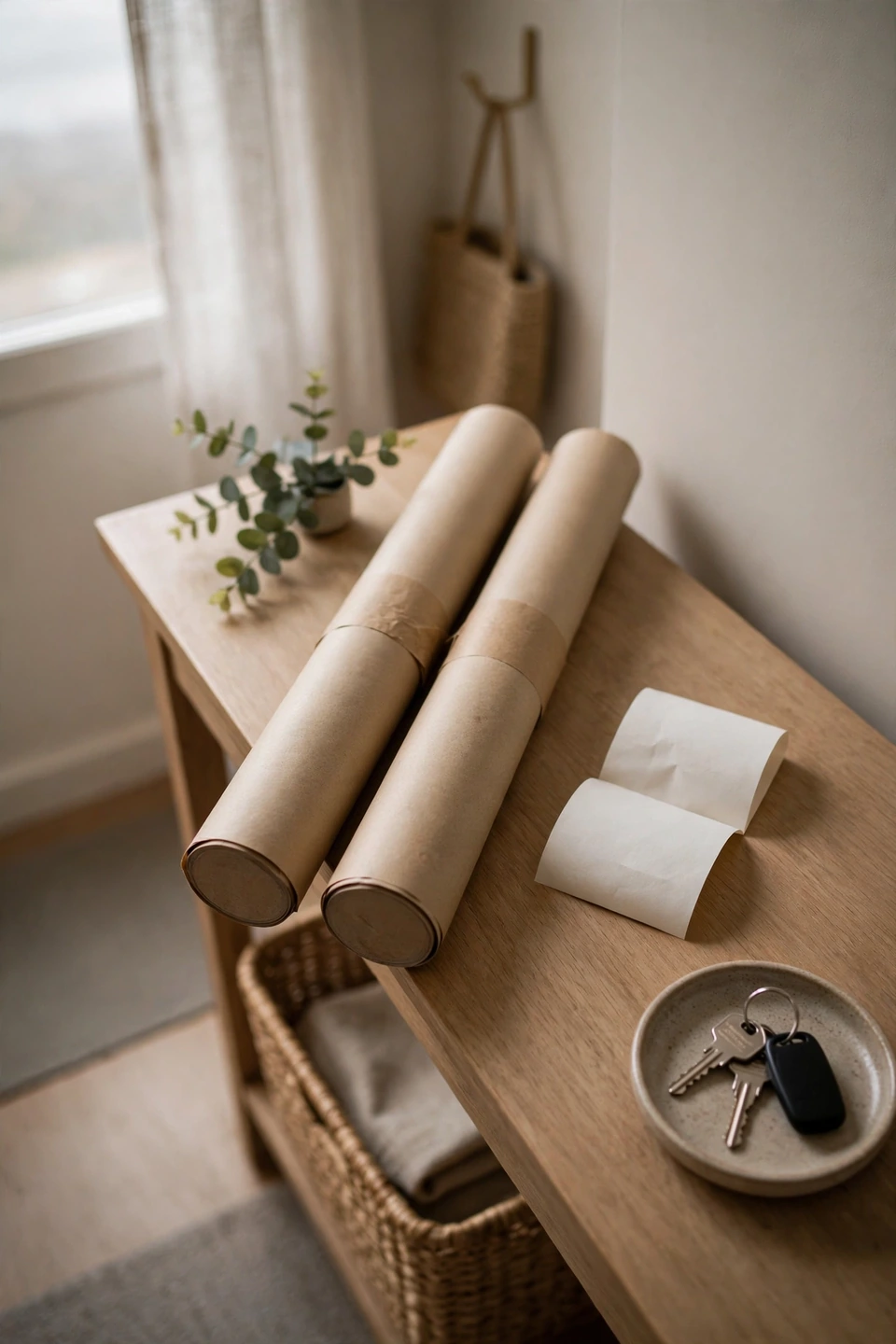
Two rolls left over and a receipt in the drawer: that’s how most first wallpaper projects end. Brands with fair return policies on unopened rolls take the sting out of ordering extra, which you should always do.
Check before you order
15. How to Pick One Brand Type and Order With Confidence

Start with your wall, not the pattern. A smooth wall in good condition can take thin matte paper. A bumpy, patched wall needs thicker vinyl. A humid room needs a line made for it.
Then narrow it to one brand type, order a sample, and test removal on a hidden spot before buying the full amount.
Best Removable Wallpaper: Your Questions Answered
What is the best removable wallpaper for renters?
The best choice depends on your walls. On smooth, satin-painted drywall, most quality peel and stick papers work well. For textured walls, look for thicker vinyl with a stronger but still removable adhesive, and for steamy rooms choose a product labeled for humidity. Always test a sample on a hidden spot first.
Is pre-pasted wallpaper better than peel and stick for renters?
Pre-pasted, or paste-activated, wallpaper often looks more like traditional paper and can be easier to reposition while wet, but it needs water and a little more mess. Peel and stick is quicker and cleaner to install. Both can be removable if you choose a strippable product and check your lease.
How do I know if a removable wallpaper will come off cleanly?
Read the product description for words like removable, repositionable or strippable, check reviews from renters, and run your own test. Stick a sample behind a door or inside a closet for a week or two, then peel it slowly and look for paint lifting or residue.
Does thicker wallpaper hide wall flaws better?
Yes. Thicker vinyl papers hide small dents, nail holes and uneven paint far better than thin papers. They are also more forgiving to install because they stretch less and are less likely to tear when you reposition a strip.
How much removable wallpaper do I need for an accent wall?
Measure the width and height of the wall, multiply to get square feet, then divide by the coverage listed on one roll. Add one extra roll for pattern matching and mistakes. Large patterns need more extra paper than small, all-over prints.
Which removable wallpaper patterns work best in small rooms?
Small-scale prints, soft botanicals, pale stripes and textured looks such as grasscloth or limewash work well because they add interest without closing the room in. Save large murals and bold, high-contrast prints for one accent wall.
Can I use removable wallpaper in a bathroom or kitchen?
Yes, if the product is rated for humidity and you keep it away from direct water spray and stovetop heat. Run the fan, wipe splashes quickly and check the edges every few weeks for lifting.
Is expensive removable wallpaper worth it?
Often, yes. Designer and higher-end papers tend to have thicker material, better color printing and more reliable adhesive. If you are covering a large wall you will see every day, spending more usually means an easier install and a cleaner removal.
Can I reuse removable wallpaper when I move?
Sometimes. Thicker papers removed slowly with gentle heat can occasionally be reused on a smaller wall, but most peel and stick loses some grip once it is pulled off. Plan to buy new paper for your next home and treat any reuse as a bonus.
How long does removable wallpaper last?
In a dry room with stable temperatures, good removable wallpaper often stays looking fresh for several years. Humidity, direct sun and frequent bumps shorten its life, so keep spare paper from the same batch for small repairs.
Conclusion
Choosing the best removable wallpaper for a rental is less about finding one magic logo and more about matching the brand type to your wall. Thin matte papers suit smooth walls. Thick vinyl forgives bumps. Mural specialists handle one big wall, and humid rooms need lines made for steam. Whatever you pick, buy a sample, test removal in a hidden spot, and keep your receipt and the removal instructions together. That small bit of care is what turns a pretty pattern into one that also comes off clean when your lease ends.
Whichever brand type you choose, order samples first and live with them for a few days in your own light. The right removable wallpaper is the one that suits your walls, your room and how long you plan to stay.
Keep the receipt and the batch number from each roll in case you need more later.
Before you start, check whether peel and stick wallpaper damages walls, learn to hang it without bubbles, and browse these removable wallpaper ideas for renters. This guide to removing peel and stick products covers clean removal at move-out. For an easy first project, try a wallpaper bookshelf.
Save this list for the next time you’re ready to order, so your shortlist is waiting.
Wall type, sample, removal test, extra rolls, receipt saved. Five checks, and you’re ready.
Free Download
Get the Renter-Safe Decor Checklist
20 landlord-approved products and tricks I use in every small space project, sent straight to your inbox.




One Comment