
15 Easy Peel and Stick Wallpaper Bedroom Ideas That Come Off Clean When You Move

The bedroom is the one room a landlord rarely sees, yet it is the room you wake up in every single day. When that room is a plain rented box, the walls set the mood whether you like it or not. These peel and stick wallpaper bedroom ideas fix that without risking your deposit. Every pattern here goes onto one wall, or in a few cases around one corner, and every one of them peels off when the lease ends.
The list runs from soft to bold on purpose. There are rose murals and quiet textures for anyone nervous about pattern, plaid and stripes for a tailored look, and dark geometrics for anyone who wants the bed wall to do all the talking. Most of these walls take two or three rolls and one free afternoon.
One honest note before the ideas. Peel and stick paper loves smooth, clean, painted walls. Heavy orange peel texture, fresh paint under four weeks old, and damp walls all fight the adhesive. Test one hidden patch behind the bed first, and the rest of this list stays fun instead of stressful.
Start Here: Which Wall Sounds Like Yours?
1. Let One Wall Bloom: A Watercolor Rose Mural Behind the Bed
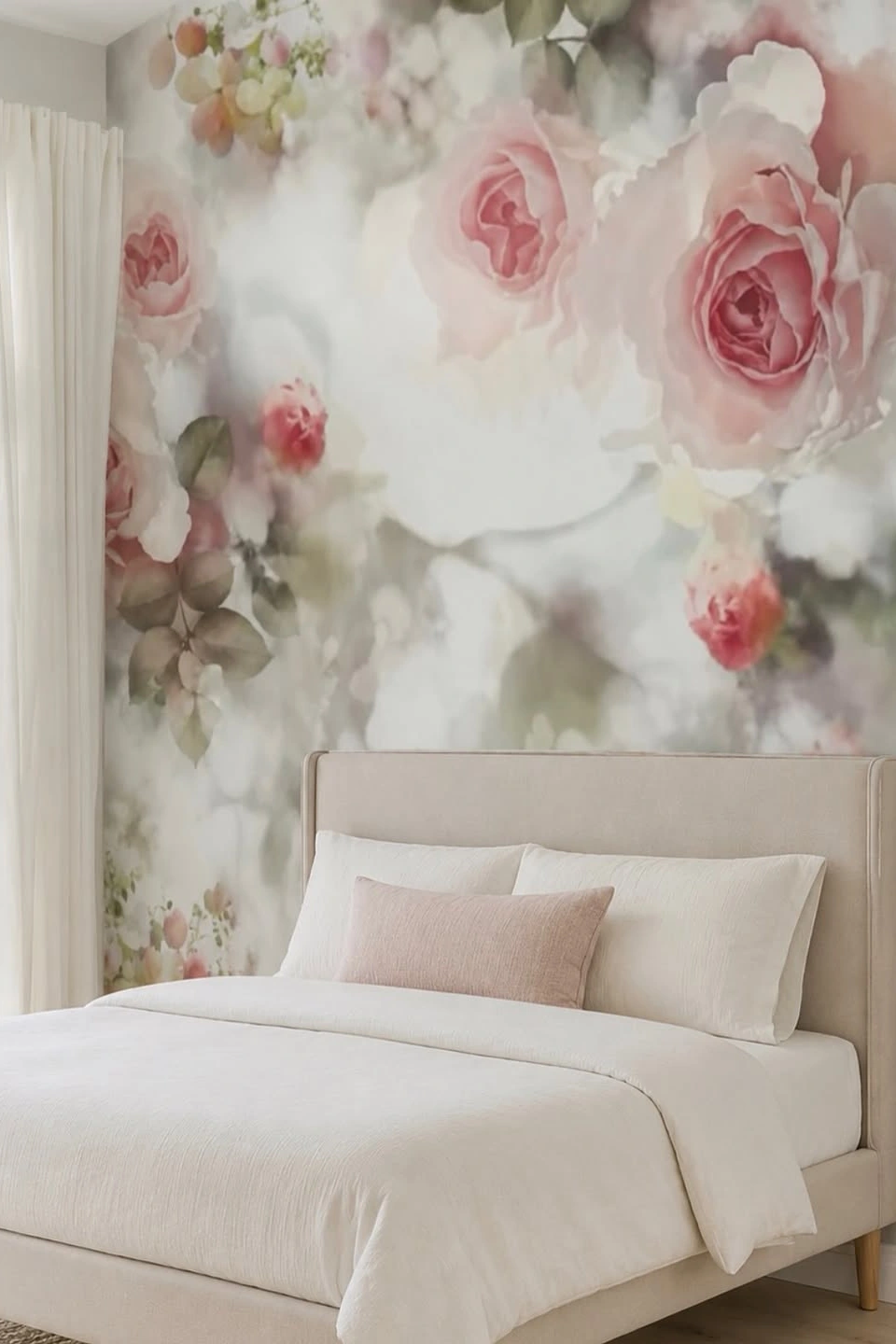
Image credit: @thepaperloft — Instagram
The roses on this wall are bigger than the pillows, and that is exactly why the room works. A mural print skips the repeating pattern problem altogether, because there is no repeat to match at the seams. The blooms drift across the wall like a painting, so small alignment slips simply disappear into the petals.
Keep everything else plain. This bed wears white bedding and a beige upholstered frame, nothing printed, nothing competing. A mural wall is the loudest voice in the room, so let it speak alone and the space feels styled instead of busy.
🌿 Scale tip: Center the largest bloom cluster behind the headboard, then work outward to both edges.
2. Borrow a Tailored Look With Hunter Green Plaid

Image credit: @luxewalls — Instagram
Plaid is the pattern for people who say they do not like patterns. This deep green check, crossed with thin lighter lines, reads more like a tailored shirt than a print, so the wall feels dressed rather than decorated. Behind a plain beige bed with matching green cushions, the whole setup looks planned in one afternoon.
There is a practical bonus hiding in the grid. Seams nearly vanish on a plaid, because the eye follows the straight lines instead of hunting for the join. If this is your first papered wall, a grid pattern is the most forgiving place to start.
📐 Seam tip: Line up the boldest stripe of the check first and the thin lines will follow on their own.
3. Soften the Whole Wall With a Painterly Floral
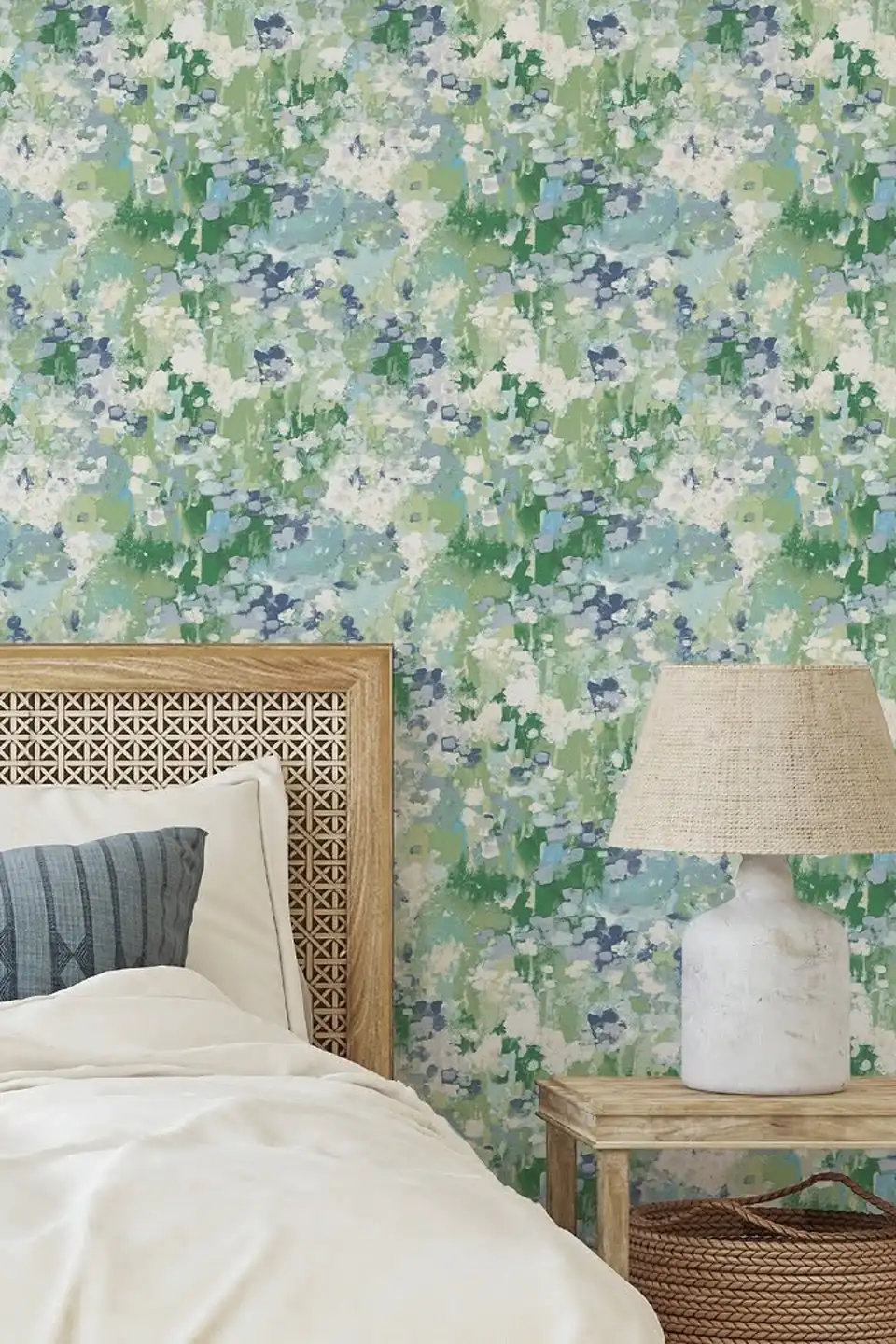
Image credit: @inawaverlyworld — Instagram
🎨 Why it works: Soft edges in the print mean soft edges at the seams. Nothing has to line up perfectly.
The flowers here look brushed on rather than printed, all loose strokes of green, blue and white with the odd touch of peach. That looseness is a gift for a first timer. There are no straight lines to keep straight and no crisp motifs to match, so the wall forgives small mistakes while you learn.
The cane lattice headboard is doing quiet work too. Its open grid echoes the garden feel of the paper without adding a second pattern, and the stone lamp on the wooden nightstand keeps the palette grounded. Floral plus natural textures is a combination that rarely dates.
4. Fake the Grasscloth: Texture-Look Paper in Warm Beige
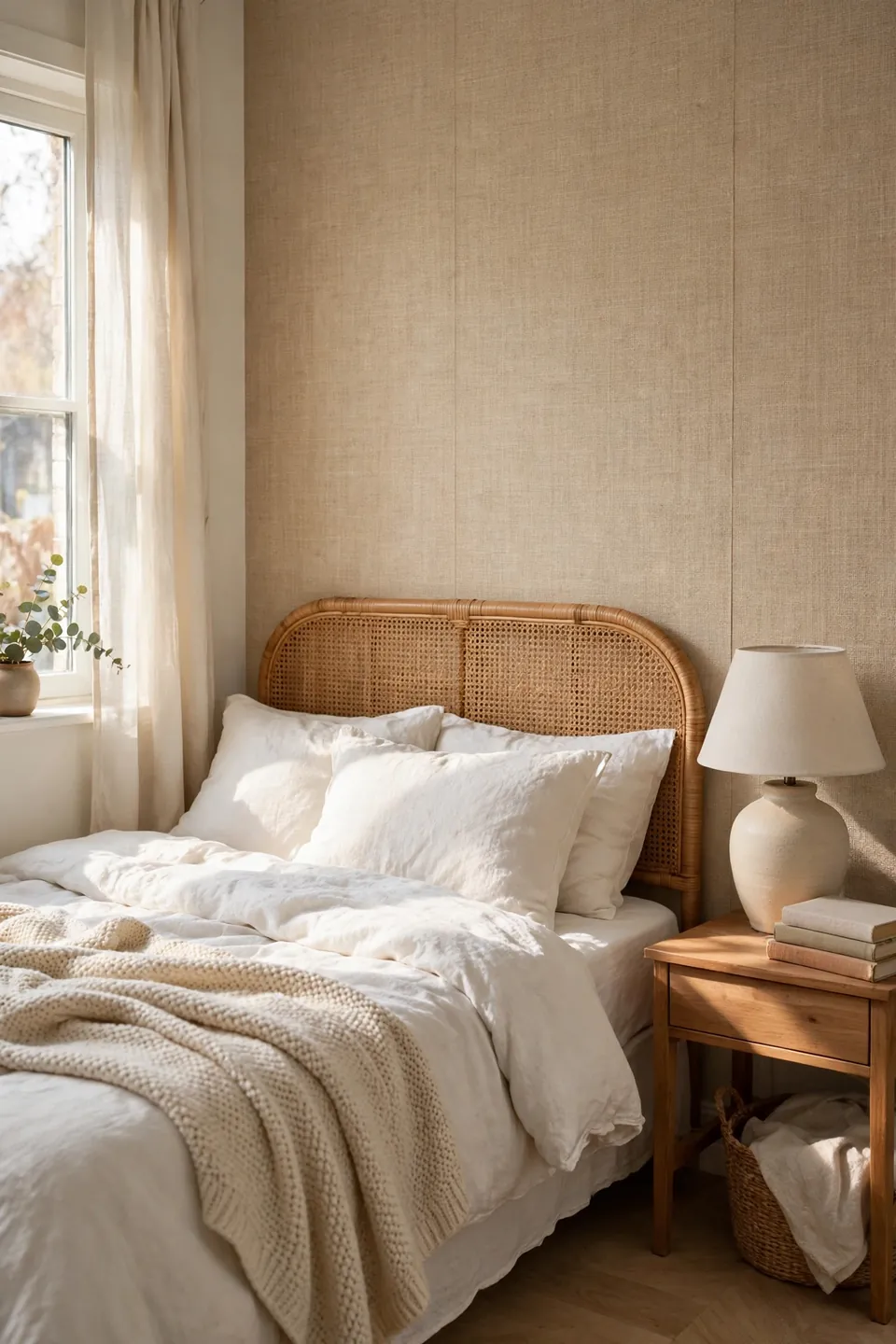
Not every wall needs a pattern. This one carries a woven grasscloth texture in warm beige, and in person that texture does what flat paint never can. It catches the morning light, throws tiny shadows, and makes a plain rental wall feel like it cost real money.
Real grasscloth is expensive, permanent, and a nightmare to remove. The peel and stick version prints the same weave onto a removable sheet, seams and all, so you get the look for one lease instead of forever. The rattan headboard and cream knit throw here lean into the texture story without a single printed motif in sight.
🧺 Straight seam rule: Texture prints show crooked seams more than patterns do. Use a level on the first strip and the rest follow.
5. Run Stripes Up the Wall and Over a Sloped Ceiling
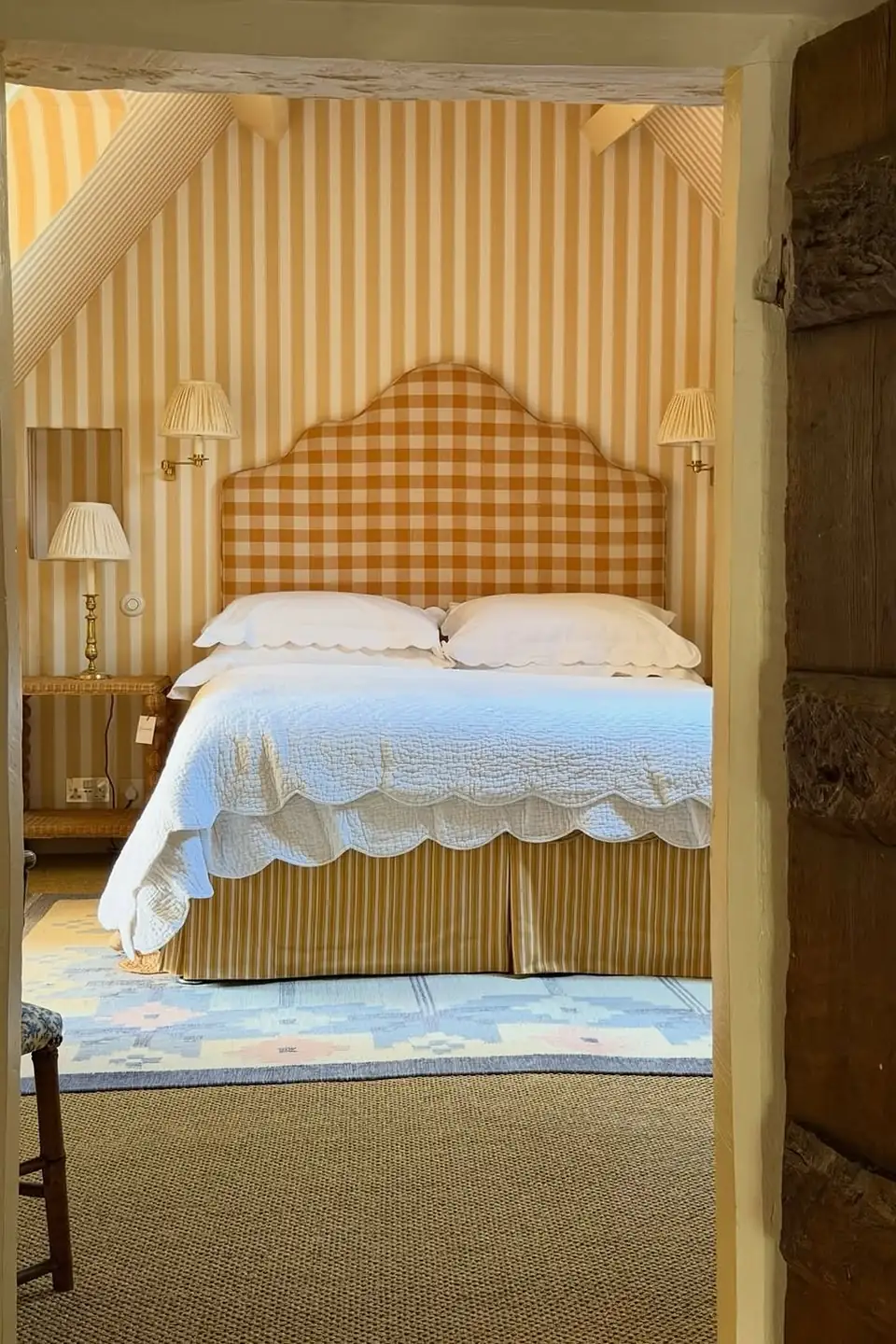
Image credit: @isabellebaldwin — Instagram
Attic bedrooms have one big problem. The sloped ceiling makes the room feel like it is leaning on the bed. This room solves it by refusing to treat the slope as a ceiling at all. The butter yellow stripes run straight up the wall and keep going over the slope, so the eye reads one tall surface instead of a wall plus a problem.
Vertical stripes also stretch a low room upward, which is why they suit under-eaves spaces so well. The gingham headboard and scalloped white bedding keep the mood soft and cottage like, proof that stripes do not have to mean formal.
📏 Slope tip: Start the first strip at the slope break, not at the floor. That join is the one your eye checks every morning.
6. Wrap Two Walls in Oversized Purple Blooms
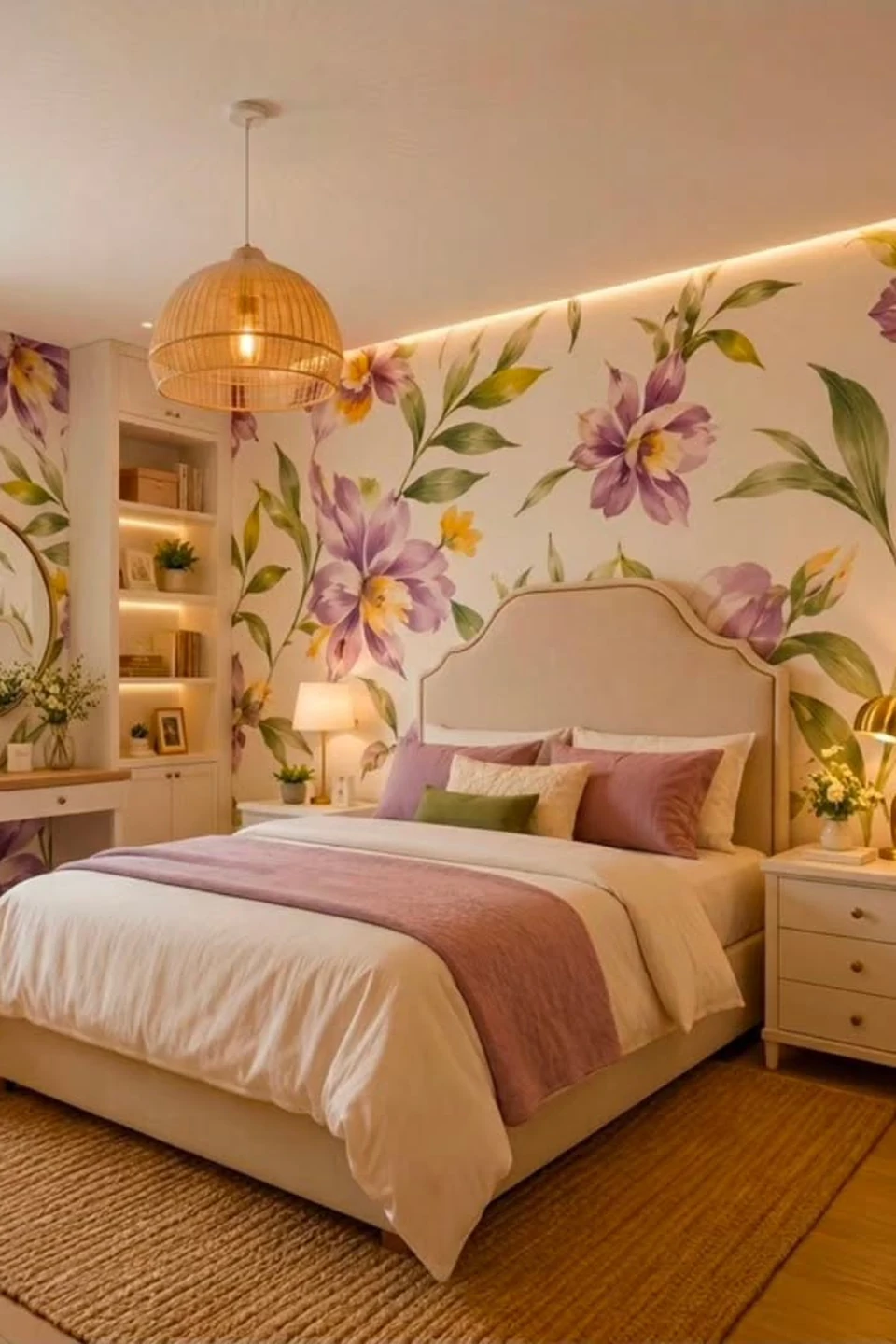
Image credit: @canvas_and_wall_south_africa — Instagram
One feature wall can look like a decision half made. Wrapping the pattern around the corner, the way these huge purple and yellow blooms wrap from the bed wall onto the vanity wall, looks like a design. The corner stops being a boundary and becomes part of the picture.
The trick that keeps a two-wall wrap calm is restraint everywhere else. The bed is plain upholstered linen, the pillows echo the mauve in the petals, and the shelves and mirror sit inside the pattern instead of fighting it. Bold paper plus quiet furniture is a balance any small room can hold.
🌸 Corner tip: Wrap one full strip around the corner instead of cutting at the join. Peel and stick flexes enough to turn it cleanly.
7. Go Graphic With a Dark Green Geometry
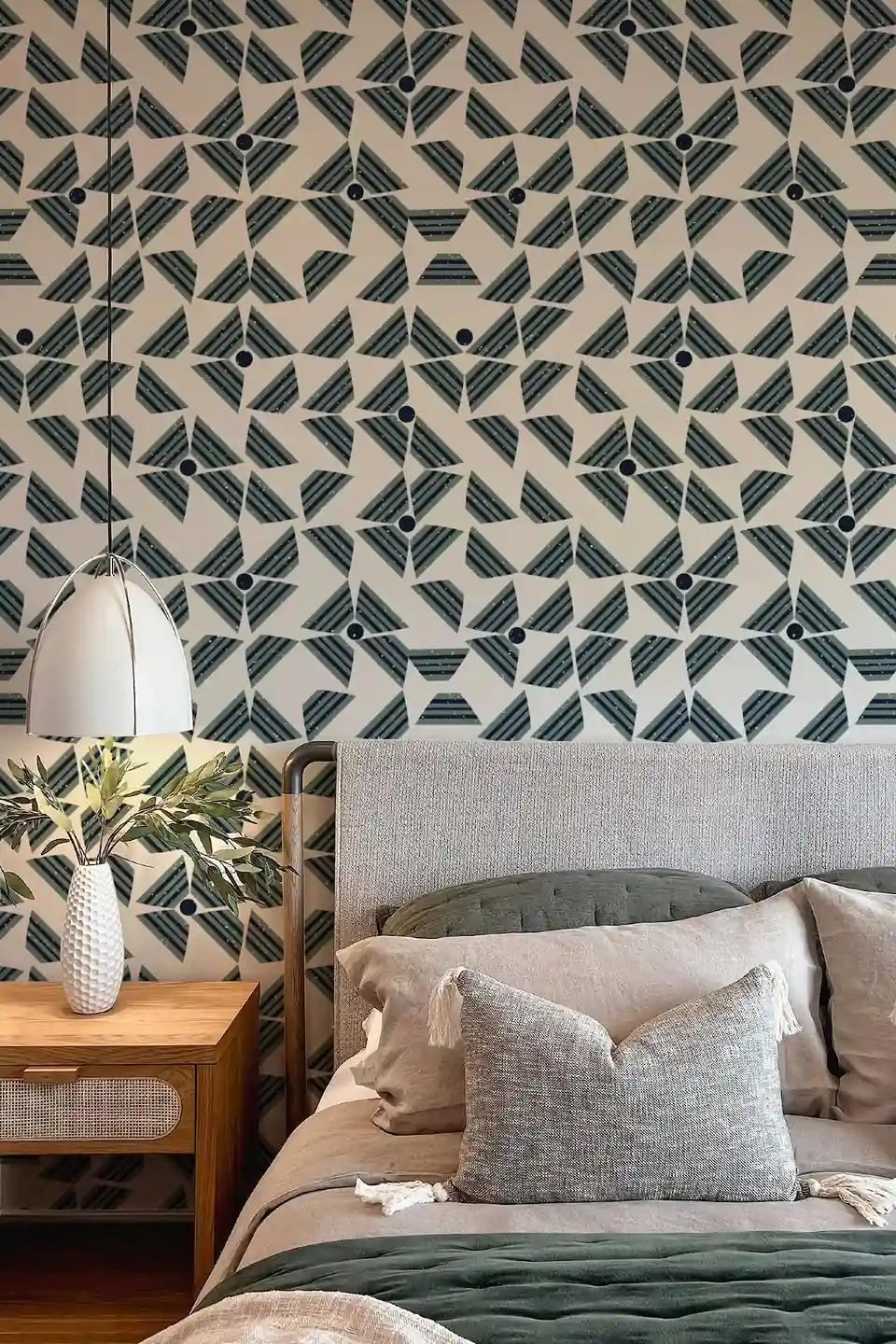
Image credit: @jained.pernia — Instagram
This pattern is all angles. Dark green and black triangles spin across a cream ground in a tight, busy repeat, and the wall behind the bed suddenly has more energy than the rest of the room combined. That is the correct ratio. The bed itself stays calm in gray linen with one olive cushion, so the geometry gets the spotlight.
A cream ground matters here. The same triangles on a dark ground would swallow a small room, but on cream they read as graphic rather than heavy. If you love bold pattern but fear the cave effect, a light ground is your safety net.
🔺 Matching tip: Every repeat has one anchor shape, here the dark dot. Align the anchors and the triangles fall into place.
8. Paper Only Behind the Bed: A Panel That Acts Like a Headboard
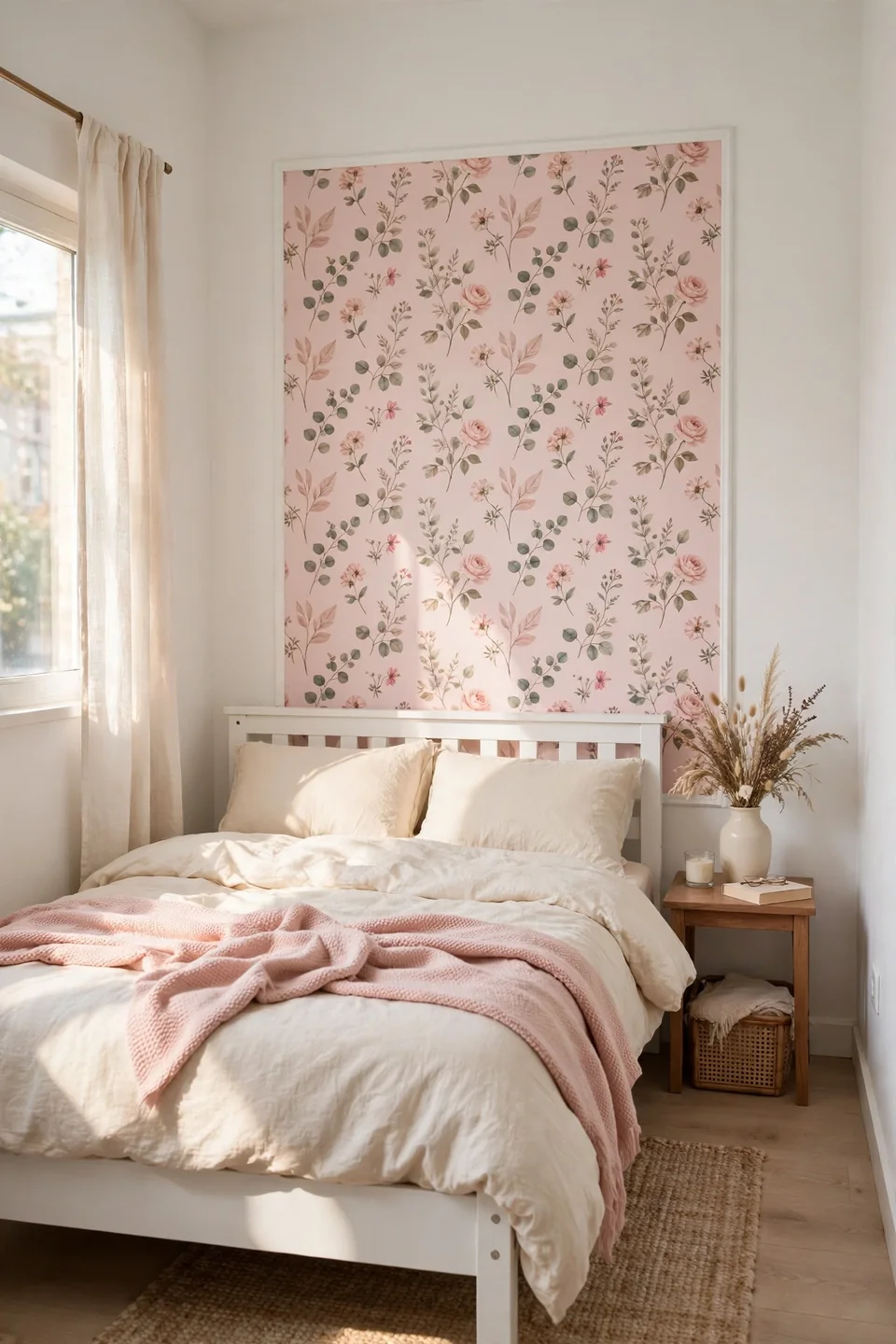
🖼️ Edge trick: A border of removable trim, or even a carefully painted edge line, is what sells the built-in look.
Here is the cheapest idea on this list, and possibly the smartest. Instead of papering the whole wall, this room papers one neat rectangle behind the bed and frames it with white trim. The panel does the job of a headboard, a feature wall, and a piece of art at the same time.
The budget math is kind. One or two rolls cover a panel, the rest of the wall never gets touched, and when your taste changes you replace a panel instead of a room. For a first rental, or a first wallpaper attempt, this is the lowest risk way in.
9. Wrap a Small Room in Gray Roses, Desk and All
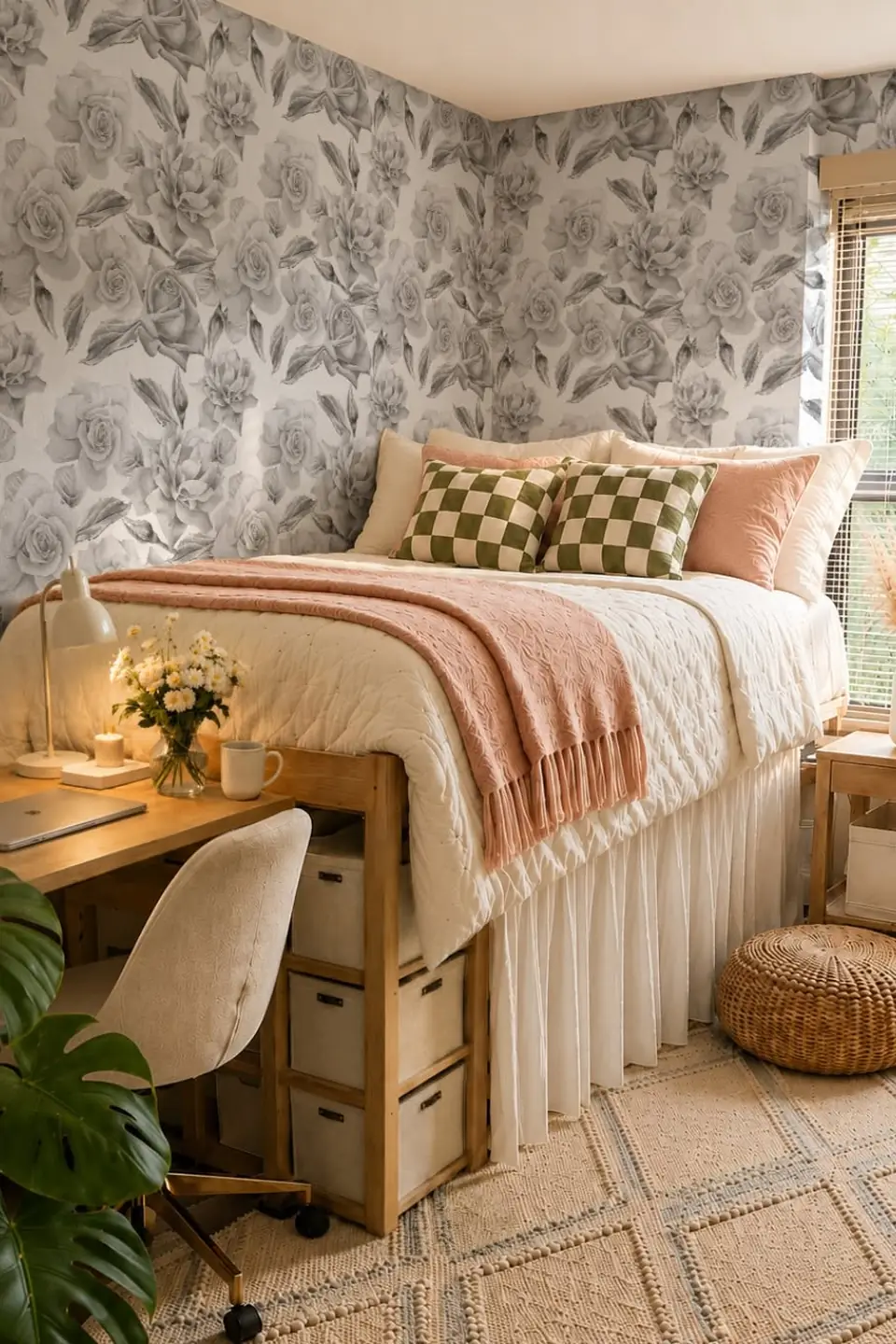
Image credit: @wallsbyme — Instagram
This little room breaks the one-wall rule and gets away with it. Gray and white roses cover the bed wall and the desk wall, and because the palette is only two soft neutrals, the wrap feels calm instead of crowded. The lofted bed, with its desk tucked underneath, sits inside the pattern like a nook carved out for sleeping and studying.
There is a zoning lesson here for studios and dorm rooms. Paper on the walls around the bed marks out a sleep zone without a divider, a rug boundary, or any furniture at all. The peach throw and green check cushions add the only color, and they can change with the seasons while the gray roses stay.
🩶 Two-tone rule: A wrap only stays calm when the print sticks to two closely related colors. Add a third and the room starts to shout.
10. Warm It Up With Retro Semicircles in Rust and Olive
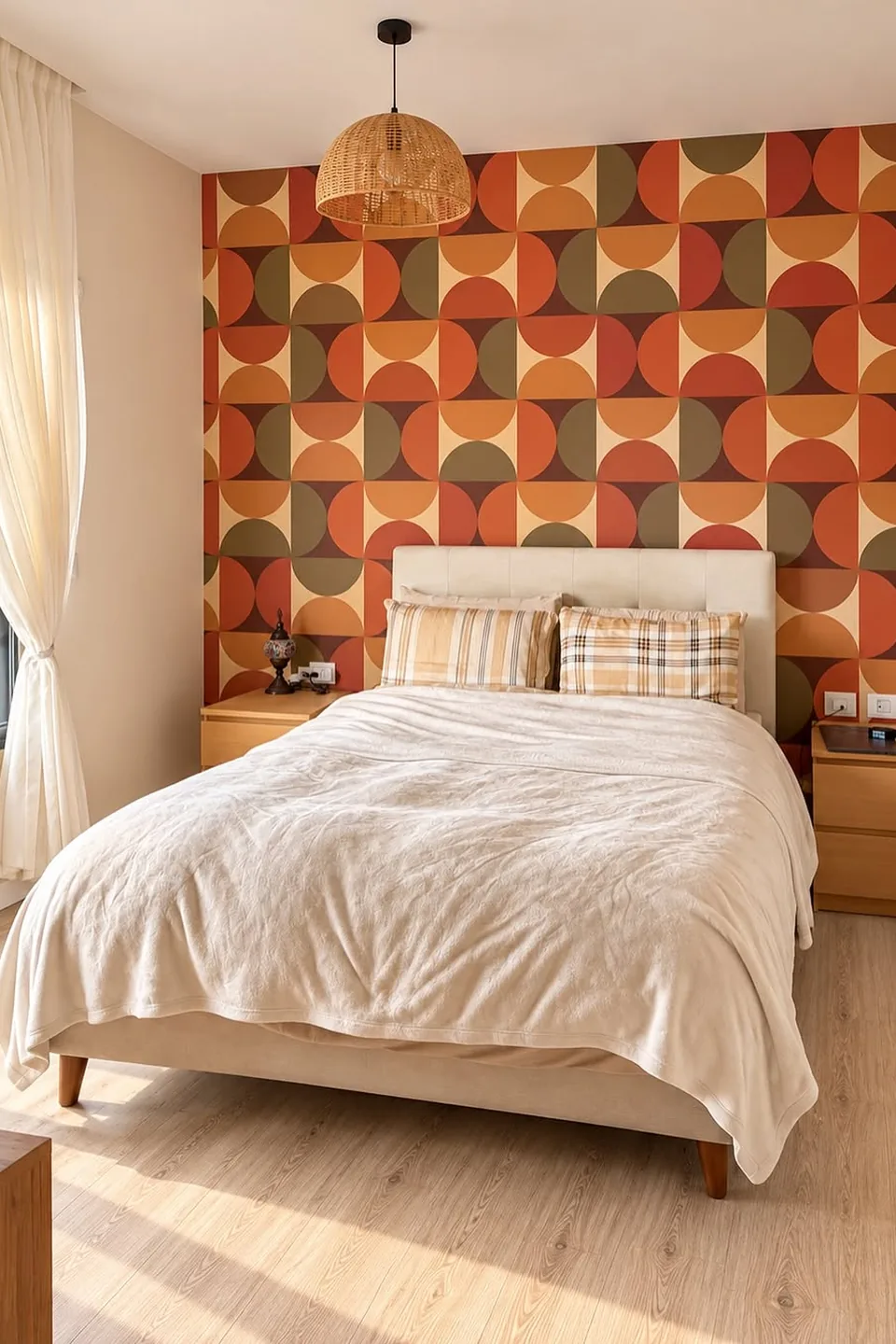
Image credit: @aleadesignstudio — Instagram
The seventies are back on the bed wall, and they brought the good colors. Overlapping semicircles in rust, burnt orange, olive and cream cover this whole wall in a rhythm that feels warm the moment you walk in. A pattern this confident turns a plain apartment bedroom into a room with a point of view.
Retro prints ask for warm company. Light wood nightstands, a rattan pendant, and plaid cushions in the same rusty family keep the wall from feeling like a costume. What they do not need is competition, so the floor, curtains and bedding all stay pale and plain.
🟠 Warmth tip: Warm white bulbs flatter rust and olive. Cold white light turns retro orange harsh.
11. Trail Chinoiserie Vines Across a Deep Navy Ground

Image credit: @libby_ferguson_studio — Instagram
Dark blue behind a bed sounds brave until you see how calm it reads at bedtime. This navy ground carries pale blue and white vines that climb and trail like a garden at dusk, peonies opening along the stems. The pattern is light even though the ground is dark, and that contrast is the whole trick.
White bedding does the heavy lifting against navy, with the white bedpost and ruffled pillows bouncing what light the room has. A brass lamp on the dark wood nightstand adds the warm note that stops blue from feeling cold. Dark wall, light bed, warm metal: a reliable three-part formula.
🌙 Night test: Judge a dark paper by lamplight, not daylight. The bedroom lives most of its life after dark.
12. Darken the Mood: Black Paper, Gold Lines, Big Cream Blooms
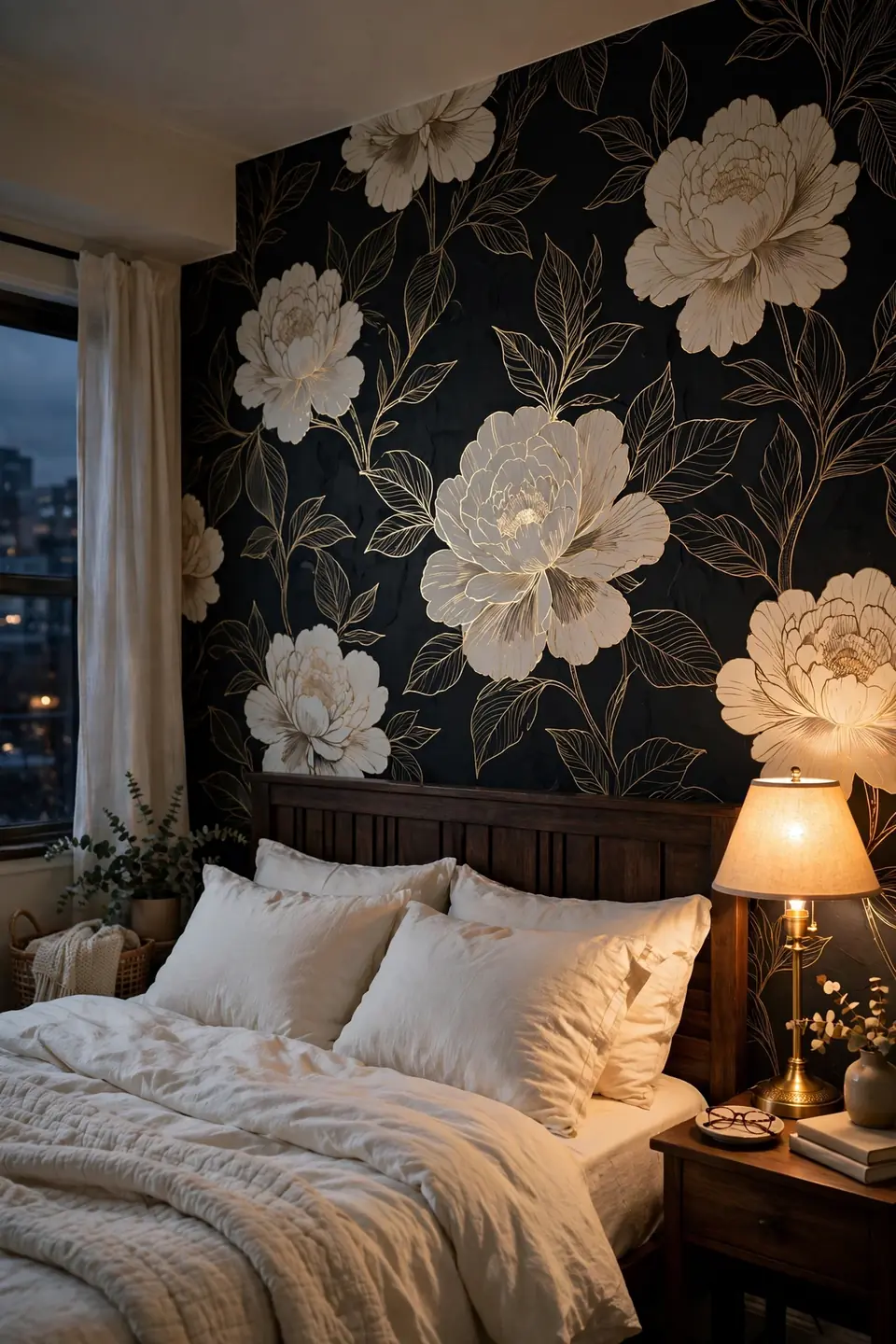
🕯️ Lamp placement: Put the lamp close to the wall. Metallic lines only glow when light rakes across them.
This is the boldest wall on the list. Huge cream peonies float on a black ground, their leaves drawn in fine gold lines, and at dusk the whole wall seems to give off its own low light. The brass lamp on the nightstand is not an accessory here. It is half the effect.
The reason black paper works in a small bedroom is the bedding. Ivory, not bright white, keeps the contrast soft and sleepy instead of stark. A dark wood headboard bridges the two, dark enough to belong to the wall, warm enough to sit with the bed.
13. Take Damask Around the Corner, Not Just Behind the Bed
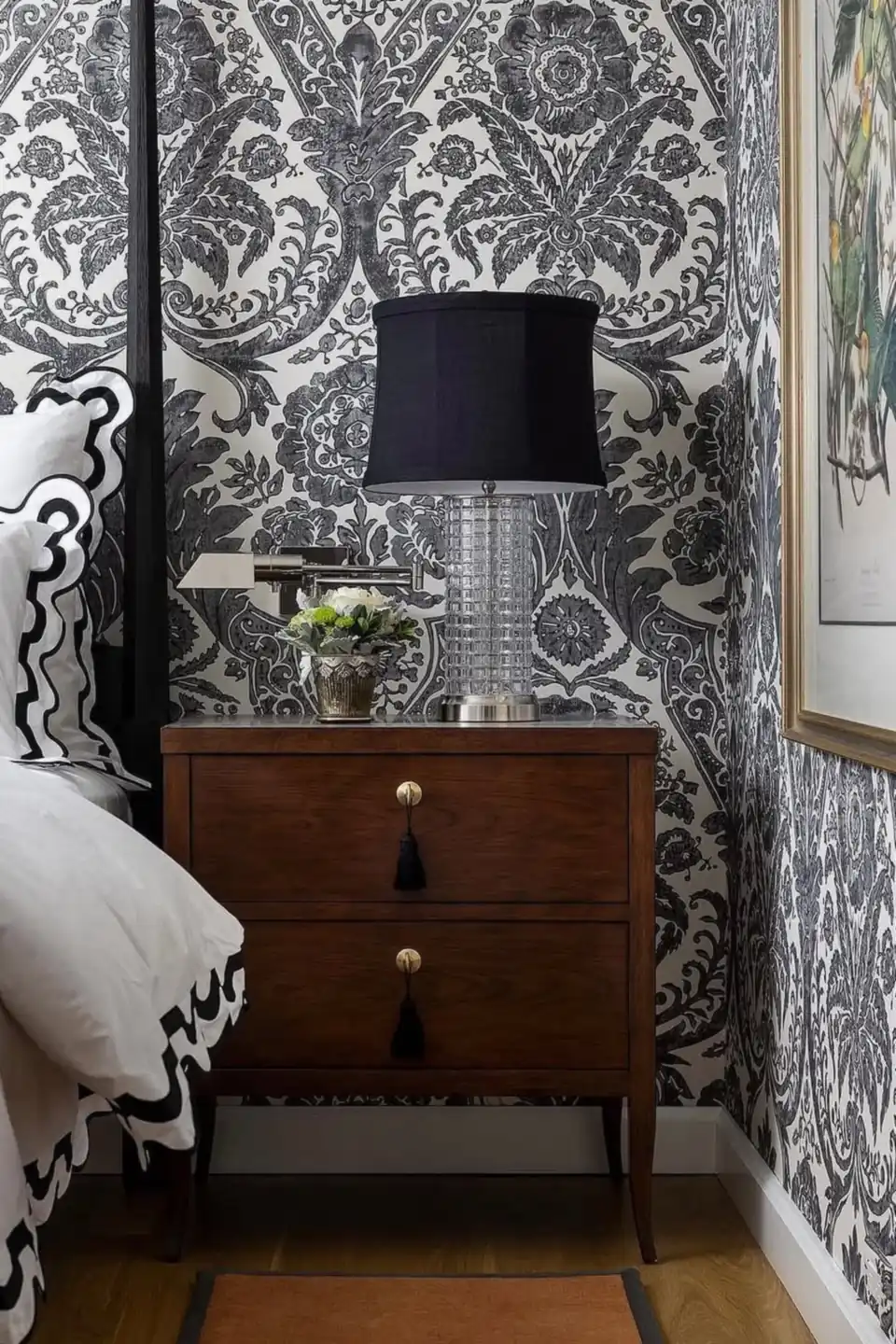
Image credit: @rachelgrayhome — Instagram
Damask has a formal reputation, but blown up to this scale in black and white it reads bold and modern. The clever move in this room is the corner. The pattern does not stop at the bed wall; it turns and runs down the side wall, so the nightstand corner feels wrapped rather than backed.
Monochrome is the renter’s friend for a simple reason. A black and white wall agrees with every bedding color you already own, this month and next year. The scalloped black trim on these white pillows echoes the print just enough to look intentional, and a crystal lamp keeps the corner from going flat.
⬛ Scale note: Oversized damask needs at least one full motif visible above the headboard, or it reads as random shapes.
14. Keep It Tonal: Chocolate Roses on a Chocolate Ground
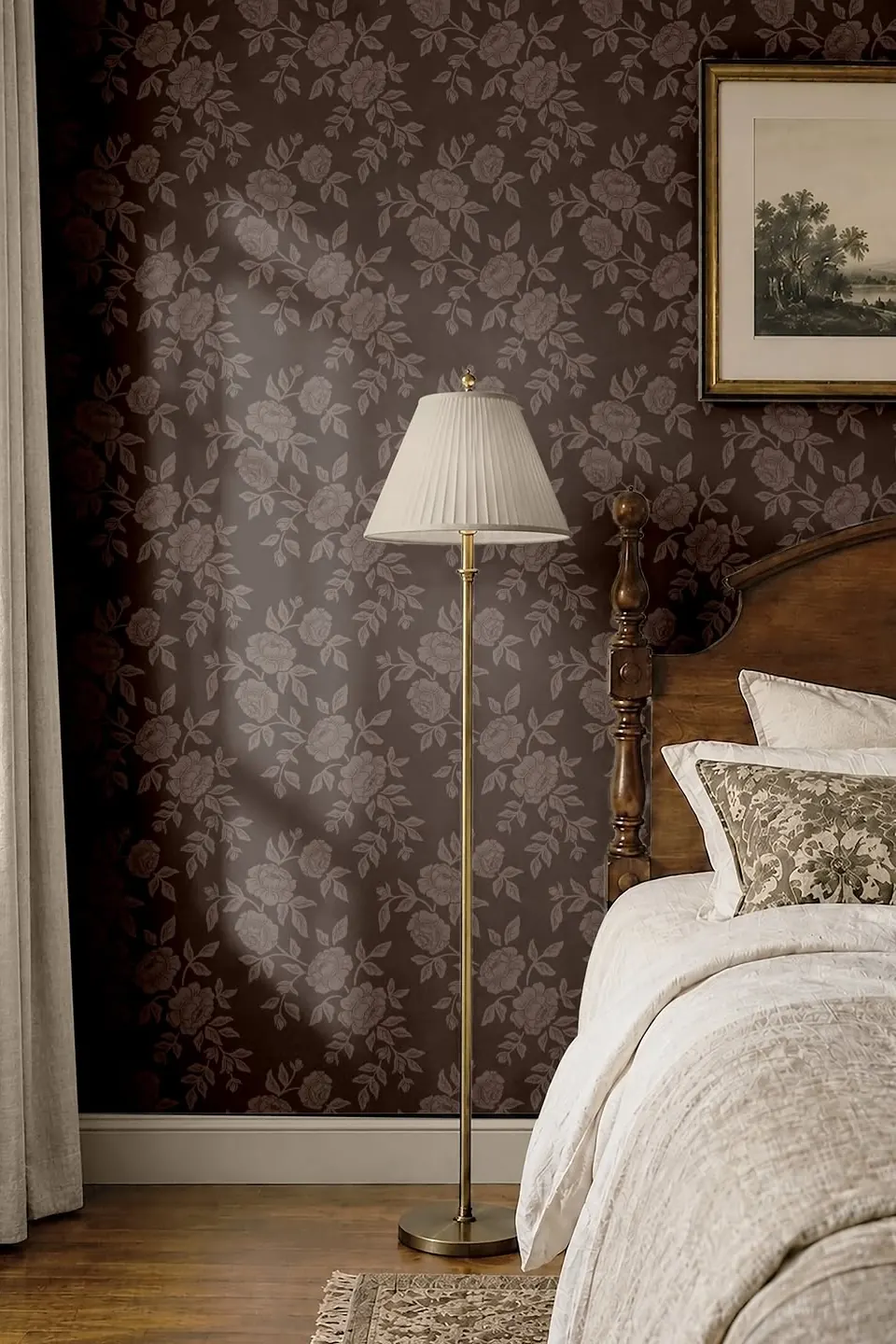
Image credit: @homebodypaperstudio — Instagram
If idea 12 feels like a leap, this is the gentle way to go dark. The roses here are printed in a brown only slightly lighter than the chocolate ground beneath them, so the pattern shows itself slowly, mostly when daylight rakes across the wall. You get pattern and mood with almost no contrast at all.
Tonal prints are also the most forgiving dark option at removal time, because any faint ghosting the adhesive might leave is nearly invisible against a dark wall. The carved wood headboard, brass floor lamp and framed landscape print all sit comfortably in the same deep, warm family.
🍫 Daylight check: Tape a sample where the window light hits it. Tonal prints live or die by that one bright patch.
15. Finish Small: A Sprig-Print Reading Nook in Sage
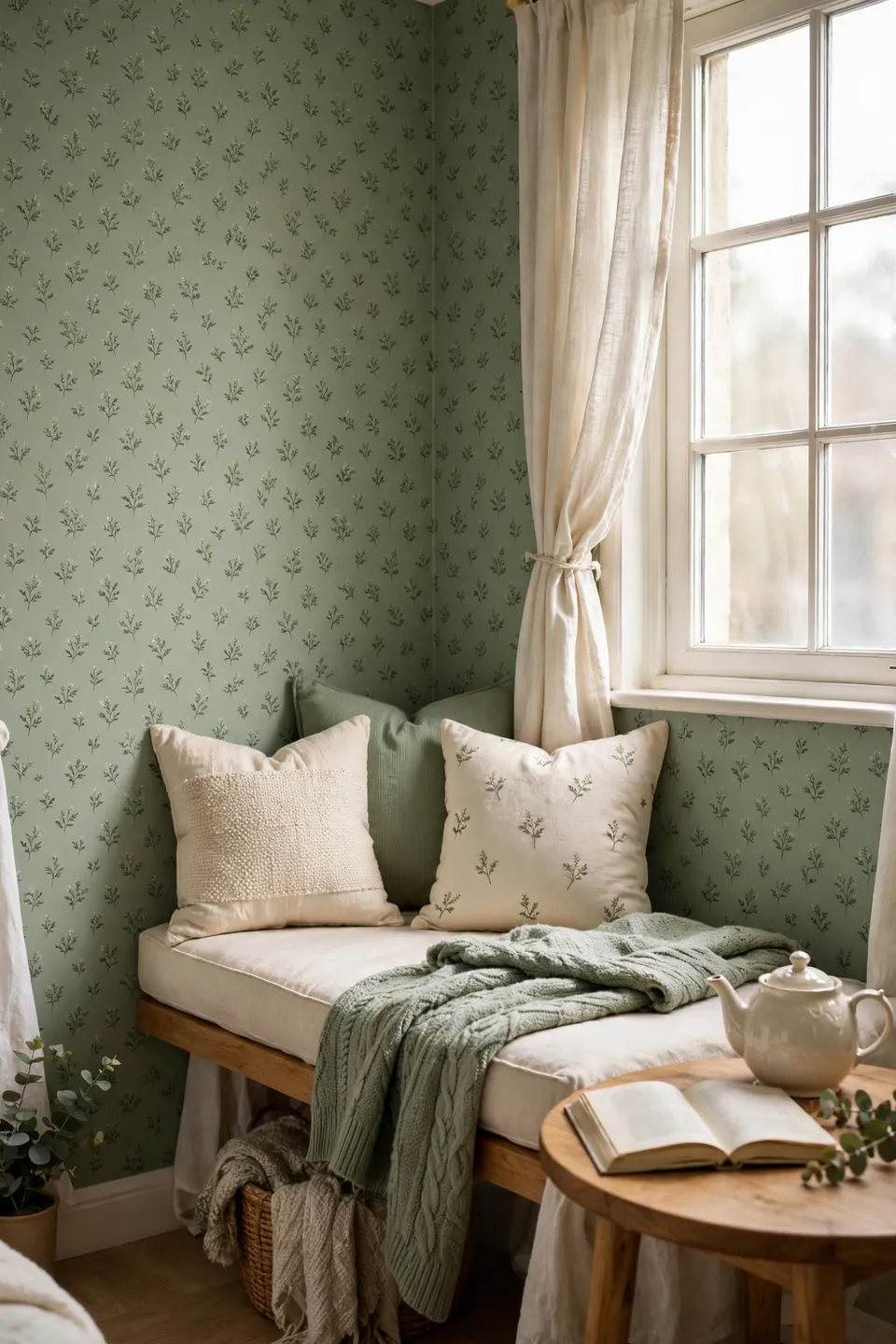
The last idea uses the least paper and might get the most use. A window corner papered in sage green sprigs, fitted with a cushioned bench, turns the dead space beside a bed into the spot everyone fights over. One pillow even repeats the sprig print, a small echo that makes the nook feel designed.
Small scale prints suit small surfaces. A tiny sprig repeat stays neat around a window frame and across a corner, where a giant motif would get chopped into nonsense. Half a roll can paper a nook, which makes this the natural home for leftovers from a bigger wall elsewhere in the apartment.
📚 Leftover logic: Order one extra roll for your main wall. The overage is your nook, your test strips, and your repair kit in one.
Before You Peel: Three Checks That Protect Your Deposit
First check: the test patch. Stick one square of your chosen paper low behind the bed, leave it a full week, then peel it. If it releases cleanly and the paint stays put, the wall is a yes. This ten minute test is the difference between a fun project and a difficult conversation at move-out.
Second check: the wall itself. Peel and stick grips best on smooth walls with a satin or semi gloss paint finish. Flat matte paint can let go of its top layer, and heavy texture starves the adhesive of contact. When in doubt, the hidden test patch tells you more than any product page.
Third check: keep the backing sheets. At removal time, warm each strip with a hairdryer, peel slowly downward, and re-stick the paper onto its backing if you want to take it to the next place. Plenty of these prints survive a second wall, which makes the one you loved in this apartment the cheapest decor in the next one.
For more ideas, see these renter friendly accent wall ideas, these wallpaper ideas for small spaces, and how to remove peel and stick wallpaper without damage when you move. This guide to removing peel and stick products is a useful backup.
Peel-and-Stick Bedroom Wallpaper: Your Questions Answered
Does peel and stick wallpaper damage bedroom walls?
On smooth, well painted walls it peels off cleanly, especially warmed with a hairdryer first. Damage happens on fresh paint under four weeks old, flaking paint, and heavy texture, which is why the hidden test patch behind the bed is worth doing before any full wall.
How many rolls do I need for one headboard wall?
Measure the wall’s width and height in feet and multiply for square footage, then match it against the roll’s coverage on its label. Most queen bed walls take two to three standard rolls. A framed panel like idea 8 needs only one or two.
Can I paper just the area behind the bed?
Yes, and it is one of the best budget moves in this list. Paper a rectangle a little wider than the bed, finish the edge with removable trim or a painted border line, and the panel reads as a deliberate design feature rather than a shortcut.
Which patterns make a small bedroom feel bigger?
Light grounds, small sprigs like idea 15, and vertical stripes like idea 5 all stretch a room. Dark paper can work too when the bedding stays light, as ideas 12 and 14 show. What shrinks a room is a mid tone pattern with mid tone bedding and no contrast anywhere.
Pick the wall that matches your nerve, order one extra roll, and give the test patch its week. The bedroom you wake up in should look like a choice, not like the previous tenant’s paint. With paper this removable, it finally can.
Free Download
Get the Renter-Safe Decor Checklist
20 landlord-approved products and tricks I use in every small space project, sent straight to your inbox.





One Comment